SonoMedStudent and UltraFest: Ultrasound in the Medical Schools…it’s time.

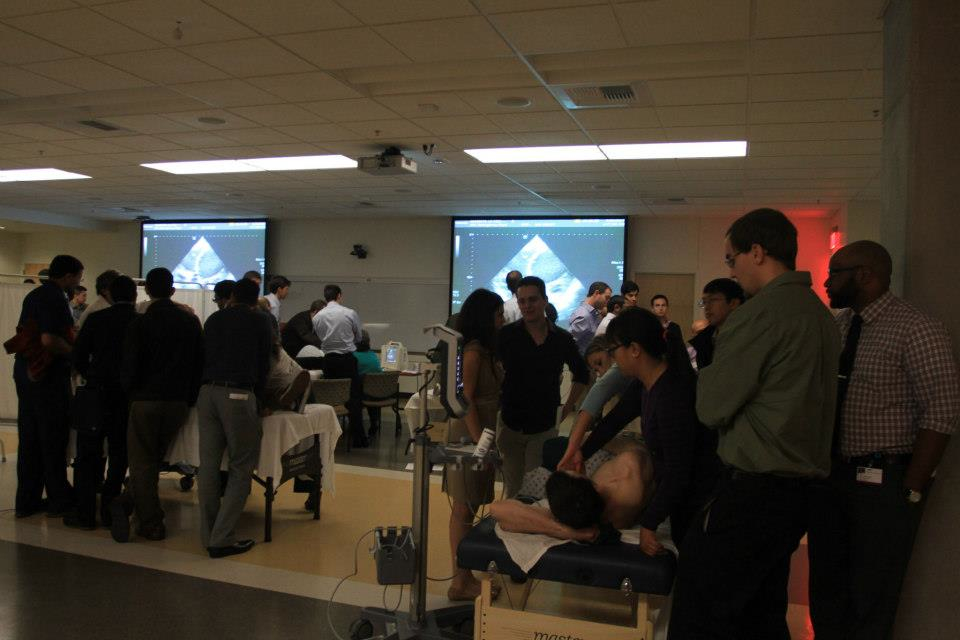
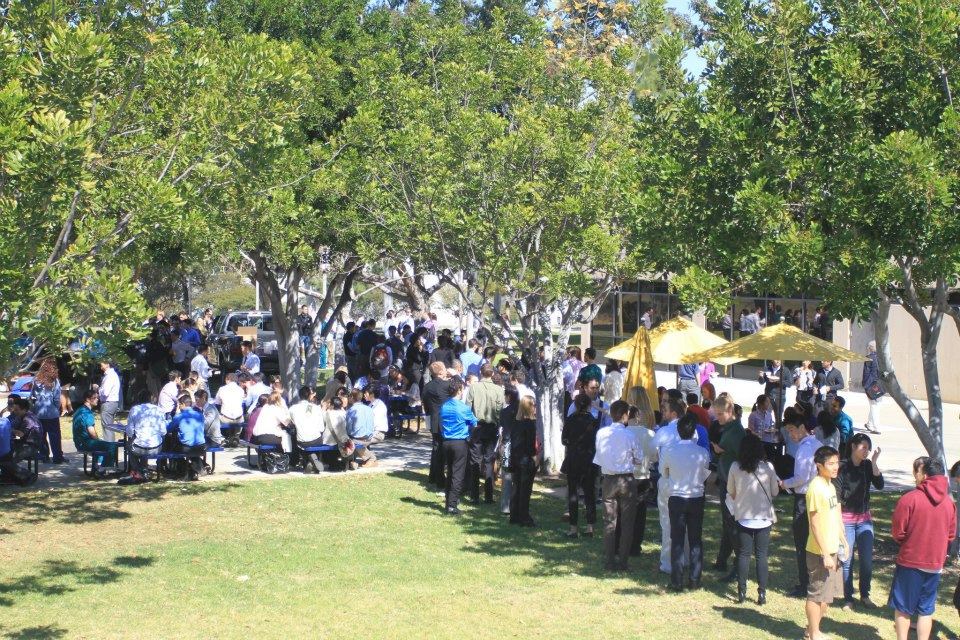
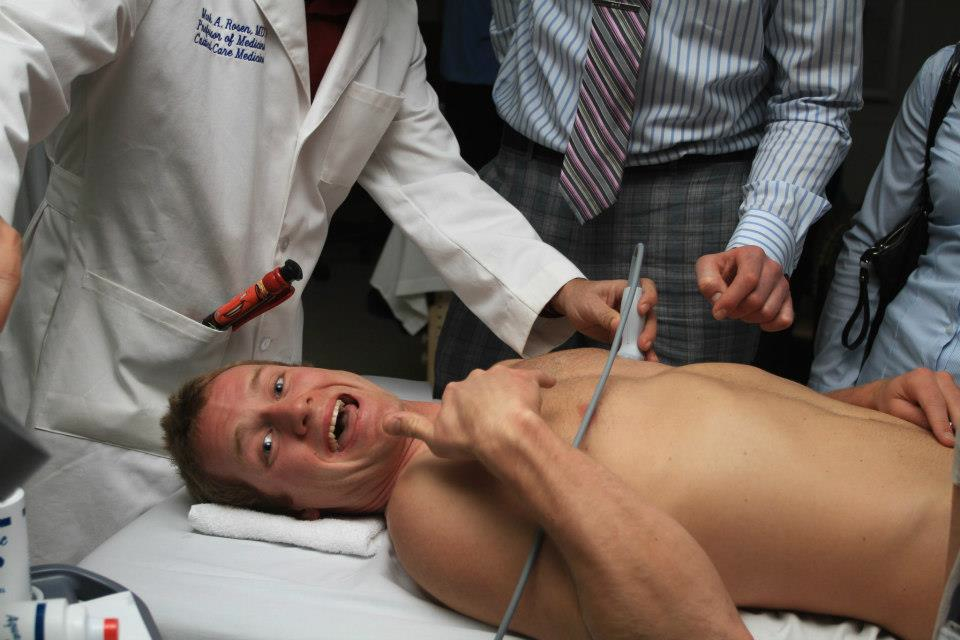
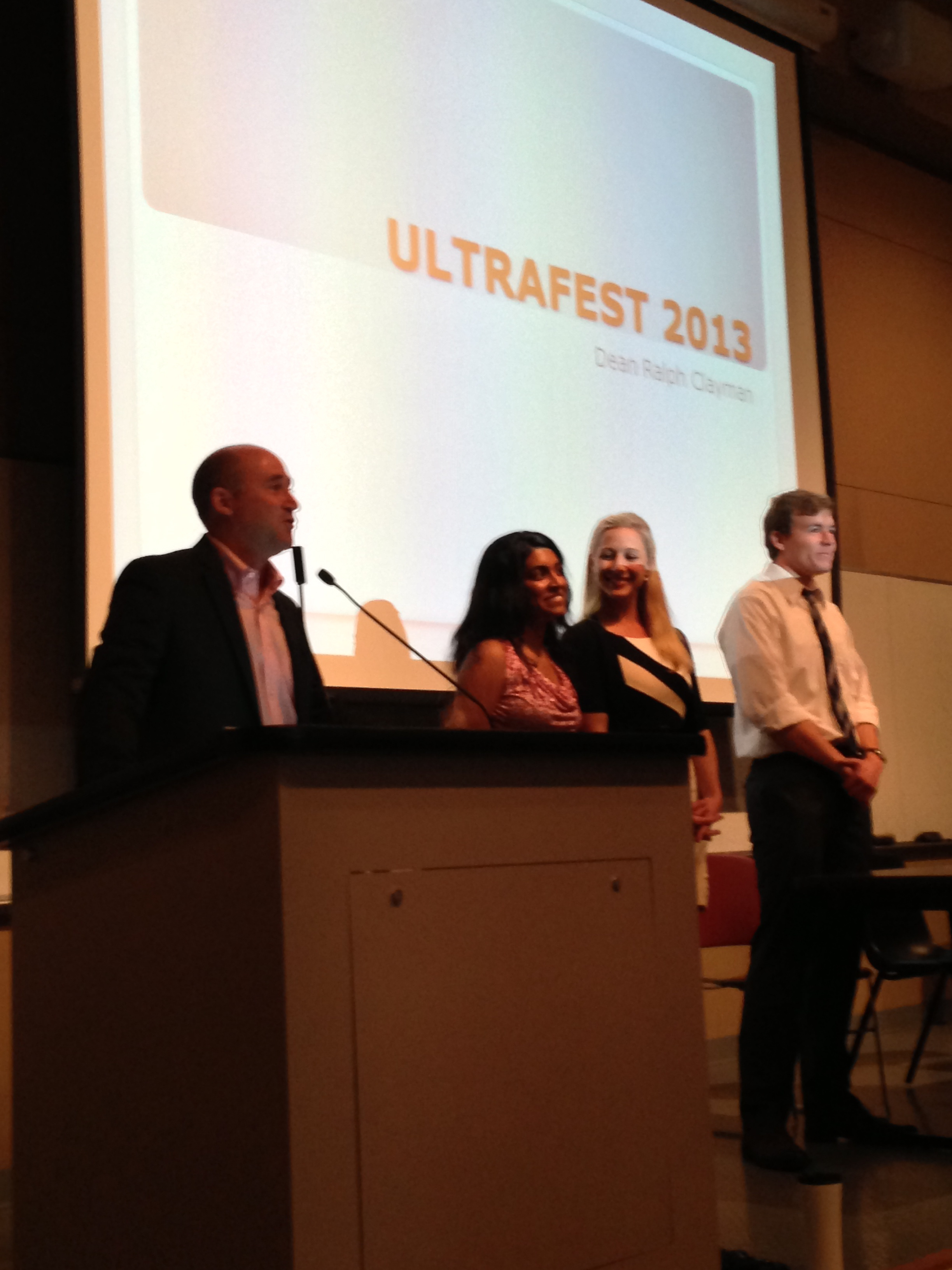
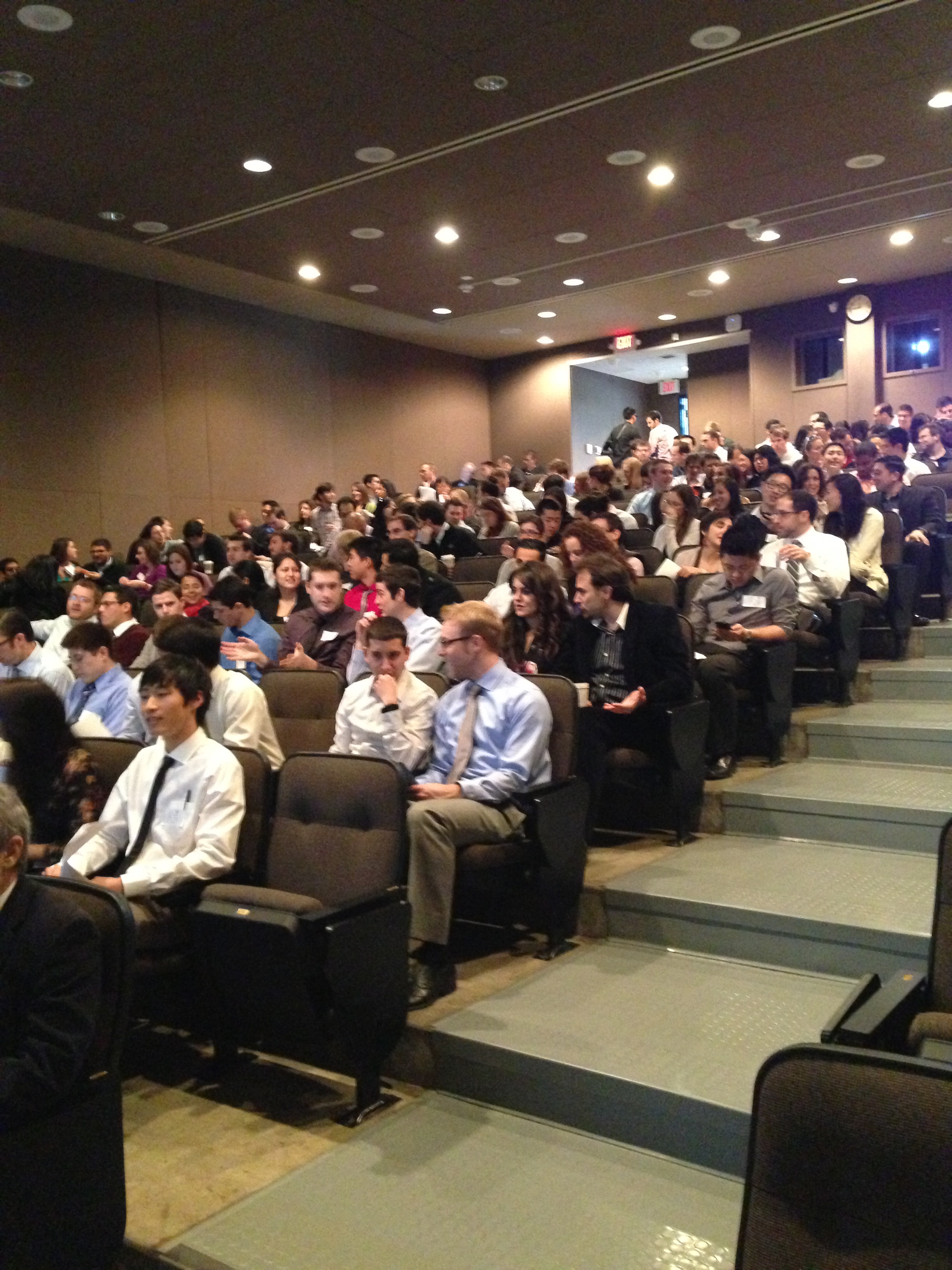
I just got back from the 2nd Annual UCI UltraFest – a FREE (yup, you read that right, FREE!) medical student ultrasound workshop held at UC Irvine this year for any and all medical students in California who want to come and learn bedside ultrasound using simulation and live models along with hearing about the future and international ultrasound. It’s getting a lot of press – as it should. It started off with an idea that came by one of my friends and mentors, Dr. Chris Fox (an ultrasound guru in his own right), and with the help of his medical students (Lancelot Beier, Kiah Bertoglio, and MaryJane Vennat), they organized faculty from all over California (UCI, Stanford, UCLA, USC) from multiple specialties. As Chris states “If I can give medical students the confidence and curiosity to want to use ultrasound all the time, then I feel they will take better care of their patients, and will provide more accurate care without turning to radiation.” You know how many medical students showed up? about 300. On a Saturday. During their free time. Some even wore a tie! …even when they ate from the free taco truck at lunch (yum!).
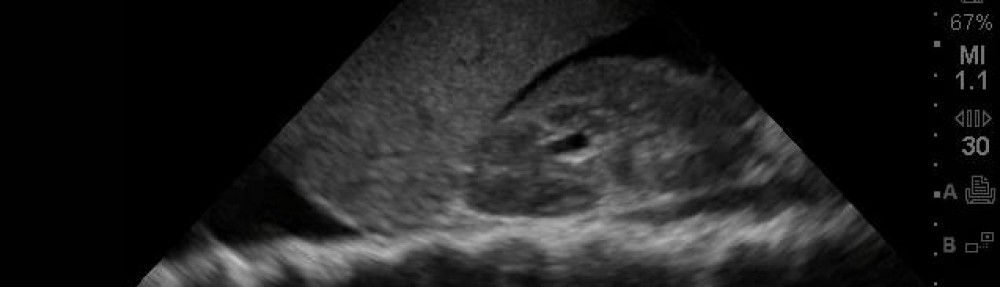
IMG_1084IMG_1077UltrafestpicUltrafestpic2ultrafestpic3For even more pics go here.

You know what that means? They want to learn it …and it should be incorporated into all medical school curriculums. It has been well studied to improve their learning in anatomy, physiology, and pathology… not to mention their patient care in their clinical years. It’s time. I’m excited to host it at Stanford for 2014!

The Dean of the School of Medicine at UC Irvine gave a quick speech welcoming the medical students about “Healthcare”: the practice, the word, and the meaning – and how that relates to ultrasound:

In a recent addition of the AAMC reporter, they discuss the FIRST ultrasound workshop held for the AAMC members and how medical students, like Kiah Bertaglio,  at UC Irvine, feel the need for ultrasound in medical education is a must. I posted about this fun AAMC event, that I was lucky enough to be a part of with some of my heroes, previously for your reading pleasure while SUSME and AIUM announced 2013 as the Year of Ultrasound (YOU) – highlighted by AIUM Ultrasound First group, the Life in the Fast Lane bloggers, the Ultrasound Podcast folks, and, of course, little ole’ me on SonoSpot while highlighting the ACEP US Section and the immense amount of social media interest/bloggers/tweets on the topic of bedside ultrasound.

In the AAMC Reporter. they state: “With rapid advancements in ultrasound technology, …a handful of the nation’s medical schools make ultrasound training a standard part of the curriculum. And there is a push to encourage more schools to use ultrasound….South Carolina is one of the first schools to implement a four-year interdisciplinary ultrasound curriculum. The program started in 2006 and is based on a training model for emergency medical workers. First- and second-year students learn how to read scans during lectures and lab sessions and through Web-based learning modules. In the third and fourth years, students use hand-held ultrasound devices to examine their first patients…..Richard Hoppmann, M.D., dean at South Carolina who also helped form SUSME, considers hand-held ultrasound devices the “stethoscopes of the 21st century.” “The technology is already here. What is lagging behind is the health care workforce who is knowledgeable and skilled in the appropriate use of these devices,” said Hoppmann, who stressed the importance of proper training….This portability allows doctors to perform bedside exams to detect acute emergencies such as internal bleeding, collapsed lungs, and intestinal obstructions. Ultrasound can be used to guide catheters with more accuracy, decreasing patient discomfort and saving time for staff. In addition, ultrasound is safer than other types of imaging because it does not emit potentially harmful radiation.

[A medical student said “It makes it exponentially easier to see real things, happening to real patients in real time. You are better able to identify something if you have seen it before.”] He added that seeing things in real time has a powerful effect on patients. Clarkson recalled one patient who, after viewing fluid buildup impairing his heart and kidneys on an ultrasound, realized he needed to improve his diet and take his medication….Like South Carolina, the University of California, Irvine, School of Medicine (UC Irvine), offers a four-year fully integrated ultrasound curriculum—the only one of its kind in California. What started in 2003 as a fourth-year elective in emergency ultrasound has expanded across the entire continuum….Students at UC Irvine have shown an extracurricular interest, organizing an Ultrasound in Medical Education Interest Group with guest lecturers and hands-on sessions. …Kiah Bertaglio, a third-year medical student at UC Irvine, helped arrange [UltraFest]. “The response was overwhelming and shows how important tomorrow’s doctors and health care workers see portable ultrasound becoming. It provided an incredible opportunity for students to learn and improve bedside ultrasound skills in multiple fields,” she said. Efforts to reach this goal are picking up at medical schools and teaching hospitals. The emergency medicine department at the Ohio State University Wexner Medical Center, East Virginia Medical School, and Wayne State University School of Medicine are incorporating ultrasound residency programs and fellowships. If this trend continues, Hoppmann predicts the technology could become a core competency that will enhance patient care across the board.”
SonoPearls&Politics: ACEP2012, AAMC2012, AIUM-US First- future of bedside ultrasound

2012 was an amazing year for bedside ultrasound. There were more conferences that included bedside ultrasound in their pre-conferences festivities, but also there were more discussions on what was next for bedside ultrasound, while SUSME and AIUM announced 2013 as the Year of Ultrasound (YOU) – highlighted by AIUM Ultrasound First group, the Life in the Fast Lane bloggers, the Ultrasound Podcast folks, and, of course, little ole’ me on SonoSpot while highlighting the ACEP US Section and the immense amount of social media interest/bloggers/tweets on the topic of bedside ultrasound. There are two conferences I went to, each with it’s own powerful voice with regard to education, medicine, and ultrasound. The excitement I felt was truly unprecedented – I was giddy, I was hopping around, I was all smiles.

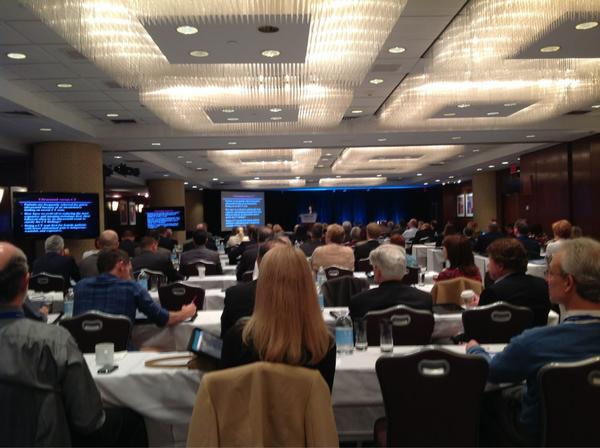
The American College of Emergency Physicians (ACEP) meeting had more ultrasound lectures and workshops than ever before with a turnout at the ACEP US Section that was more than any other (although I dont have the exact numbers, the ballroom it was held in was huge, and those who came late had to stand because all the seats were filled). ACEP was amazing. period. From the great lectures/workshops (even the on-site resuscitation of an emergency physician who went into cardiac arrest in the lobby of the convention center (revived by fellow emergency physicians through use of the handy-dandy convention center defibrillator to then have his heart checked for cardiac activity by Dr. Chris Fox with the ultrasound machine he was using during his workshop, which was happening right next to that location) and the Aurora Mass Casualty Response Video, (also seen here), which was one of the most moving videos I’ve seen about emergency response, teamwork, and humanity (I’ve said this many times, but Ill say it again – I LOVE my job – but even better than that, I love those who I do my job with – side-by-side – and what a privilege to be able to feel that way) to everything inbetween and afterwards, ACEP was once again a success.

The Association of American Medical Colleges (AAMC) meeting in San Francisco was equally amazing, particularly with regard to the future of medical education, discussing the concept of the flipped classroom, and the time given to discussing the incorporation of bedside ultrasound into medical education for medical schools – with the first ultrasound workshop being held in its history lead by the “God’s of Ultrasound in MedEd” (that’s my term of choice)  -Drs. Richard Hoppmann (Univ South Carolina), Chris Fox (UC Irvine), and Michael Blaivas (all of whom will be at the World Congress: Ultrasound in Med ED)…. with help from ultrasound educators from Wayne State, Ohio State, and Stanford (yup, little ‘ole me again and my star medical student models). There was even a separate day at Stanford where a 60 minute slot was given to discussing The Stanford 25 (by none other than Stanford’s Dr. Abrahim Verghese himself) and one of it’s aspects, Bedside Ultrasound (by one of our ultrasound team members, Dr. John Kugler, an internal medicine doctor who is starting to incorporate ultrasound into internal medicine residency education – yup, it’s spreading!! – and it’s about time!). No tweets on this conference, but the above should be stated anyway.

The Ultrasound First conference went on with tweets happening every hour! I was unable to attend this one, but so happy that my twitter friends did. It is obvious that 2013 truly is the year of ultrasound. Spreading to medical education, being a multi-disciplinary educational and practical tool, and having a united voice on its value were all discussed – in addition to some pearls on the hot topics including pelvic ultrasound and MSK ultrasound, as well as how ultrasound is becoming an acceptable tool for renal colic and breast masses.

Since I learn from all my Twitter friends, I figured the best way to share is to take out the middle person (yes, Im talking about me). That way you could get it from their own words: Here are only a few posts from #ACEP12  and #US1st that made me go “Hmmmm….” – with a little commentary every now again from me, because I just can’t NOT give my opinion – I know that’s shocking to those of you who know me. Heehee. My tweets are in here as well.

ACEP:

From @USEDCDN : Emergency US management course  “From Blaivas: Starting to see 1st lawsuits for lack of US use in vascular access” – This definitely sparked my attention – lawsuits for LACK of US use?? Wow, well the standard of care is changing, and if a proven tool to minimize complications is right next to you and you dont use it and that complication occurs… there’s a legal risk. Learn it, use it, love it and maximize patient safety.

Also from  “@USEDCDN: EUS MC Resnick: Emergency US is not an extension of physical exam. Big difference. It answers clinical questions.” Ok, this needs mention, but I already posted a rant about this – of course – so will not bother you with another rant… not right now, at least.

From @jeremyfaust  – “Weingart: 4. When is CPR futile? End tidal < 10 after 10 min. Confirm with US #acep12.” Enough said – and honestly, anything that Scott Weingart says, i will believe. period.

“Rice #ACEP12 echo in cardiac arrest- can see if cause PE/tamponade, or if standstill or beating heart. Look or you may waste time/resources” and “echo and IVC in critical patients: LV fxn, IVC collapse, RV size, contractility- will differentiate PE, CHF, hypovolemia, hypervolemia” – you never know what you may find, and what may be an intervention that you didnt think of until you saw your ultrasound (ie. tpa in a dilated RV).

@bedsidesono: lung #ultrasound talk from ACEP athttps://vimeo.com/51212231  brush up on A-Lines, B-Lines, lung sliding and more…#FOAMed” – what a giver he is! Stone is one to listen to, hear his opinion, and read his immense amount of publications.

Point of care US dominating new speakers forum so far at #ACEP12! Msk, soft tiss, pleural…”

Congrats @GeriaSonoMD on being new Chair of #ACEP12 US section mtg. Our fellow, Viveta Lobo said you talked her into EM. Awesome. So thx!

Raj Geria – new #ACEP12 US section Chair! Highest priority: pathway to US fellowship accreditation : to ensure safety and quality

Find @SAEMAEUS on twitter and follow to see what’s new with the ACademy

Nova panebianco at #ACEP12 taking about SAEM Academy of Emerg US and SonoGames – also subcommittees they are involved in..

A great resource from the new academy of emerg US : http://SAEM.org/academy-emergency-ultrasound-resources …

Resa Lewis #ACEP12 US section mtg- talking ACGME US milestones and how ACEP can help in achieving them for all residencies

Blaivas #ACEP12 – TEE will show potential causes of hypotension & shock ..Valvular dz..And can be electrically linked :pace & defibrillate. No need to interrupt chest compressions for TTE as can see what’s happening with heart from across rm c TEE. Can use TEE when bad view on TTE or unable to do TTE due to habitus, lung dz, chest compressions. TEE can assess quality of chest compressions too. TTE can tell you if there is standstill, clot in RA, dilated RV, tamponade, and to see a beating heart. TTE (echo) better than checking for pulses for need for chest compressions. AAMC mtg in SF! Spreading to med schools!. WINFOCUS and AIUM EM and crit care goals… Going global!

http://Sonocloud.org  and http://sonoguide.com  : 2 great online resources for images and education! – plus the test: http://emsono.com
@sinaiemus: Rob Blankenship at Ultrasound section meeting: over 56,000 ACEP US tests completed at http://www.emsono.com/acep/ACEP_EUS_Exam.html … #ACEP12
Congrats Vicki Noble and @ultrasoundpod for your well deserved award for your contribution to emerg ultrasound!!
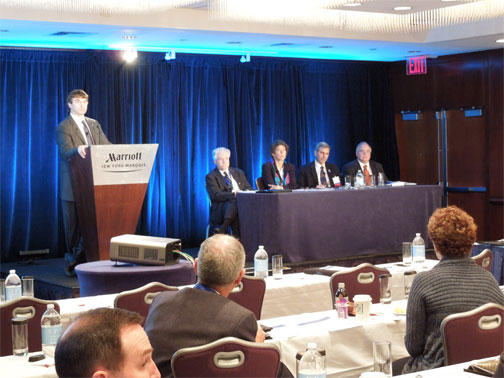
Ultrasound First Forum:
  1. Jason T Nomura MD @Takeokun “To engage the patient groups you need people who are interested in patient advocacy not just the disease state. 
  2. View image on Twitter
  3.  Jason T Nomura MD @Takeokun “Lev demonstrating high res eval of ankle tendons with dynamic scanning for function, something that can’t be done with MRI 
  4. Jason T Nomura MD @Takeokun “Nazarian MRI does not have the resolution to evaluate the fibrillar pattern of the Achilles compared to US. 
  5. Jason T Nomura MD @Takeokun “Hoppmann- if education and integration of US starts in medical school it can change the paradigm. 
  6.  Jason T Nomura MD @Takeokun “Hoppmann has graduated several classes of medical students who had US integrated into their med school curriculum. 
  7. Jason T Nomura MD @Takeokun “Moreau most common imaging modalities for Team USA is X-ray and US, very little CT use.
  8. Mike Stone @bedsidesono “Levon Nazarian at  speaking on MSK imaging. It’s not just more convenient than MRI – higher res, no contraindications, pt’s prefer it”
  9.  Jason T Nomura MD @Takeokun “Nazarian US for sports med is portable to get the technology to the field and locker room, MRI not portable. 
  10. Jason T Nomura MD @Takeokun “Pellikka 2011 joint guidelines from ACC,ASE, ACCP and others about the appropriate times to use echo in the assessment of pts. 
  11.  Jason T Nomura MD @Takeokun “Moore bringing up the ASE and CV Anes guidelines for US guided vasc access. Advocates real time US guidance 
  12. Mike Stone @bedsidesono “Leslie Scoutt from Yale – ACR appropriateness criteria for recurrent renal colic – US & Noncon CT equal ratings 
  13.  Jason T Nomura MD @Takeokun “Scoutt 50% of pts with renal colic will likely have another episode.  that rad exp can build up.”
  14.  Jason T Nomura MD @Takeokun “Scoutt noncon CT is the “gold standard” for renal colic imaging in the US currently.  but there is the rad “risk.
  15. Joshua Copel @jacopel “Lynn Fordham (Pedi Rads) US optimal for pyloric stenosis now. No more need for upper GI or other radiation. 
  16. Jason T Nomura MD @Takeokun “Fordham N/V can be pyloric stenosis, malro, intussusception, and gastroenteritis. US for dx.
  17.  Jason T Nomura MD @Takeokun “IOTA group from Europe with close to 2,000 pts showed very good discrimination of malignant vs benign ovarian mass on US. 
  18. Jason T Nomura MD @Takeokun “IUD placement or misplacement easy to note on US; can present for DUB and pain. t
  19. Jason T Nomura MD @Takeokun “Advances to 3D US allows volumetric imaging that could only be done previously with CT or MRI. But US spares the radiation of CT 
  20. Joshua Copel @jacopel “ Dr. Beryl Benacerraf making case for US over CT, MR in female pelvic imaging at forum. pic.twitter.com/vCQYvpi8 View image on Twitter
  21. Jason T Nomura MD @Takeokun “ is not only about when &where US can be used but education for practitioners and patients per @AIUMPresAlfred
  22. Jason T Nomura MD @Takeokun “@AIUM_Ultrasound represents 9,200 members from 36 specialties with a focus on advancing US use 
  23.  Joshua Copel @jacopel “ opening of US First forum now at Marriott NYC. Over 100 attending from medical profs, industry, payors. Very exciting & energetic”
  24.  Jason T Nomura MD @TakeokunIt does seem to be a who’s who of US at the reception.

SonoLinks: new links to awesome US educational sites/texts/apps

Since the last installment of SonoLinks, there have been several more awesome US related websites/links that 1) I have found in my search for more, 2) are new ones that just came on to the horizon or 3) I totally forgot to add before – – –  They are all free! They are all listed on our Blogroll (scroll down, on the right of the screen) that we keep updated. If anyone knows of any other great sites, send them on over!

SonoCloud – a new and excellent website for free and easy visualization, downloading, uploading, and learning of US clips and images – by Matt & Mike (of Ultrasound Podcast) and Mike Stone (current ACEP US Section President). Can you say A-W-E-S-O-M-E! You can help fill up their library of clips by downloading your own on there too.

WikiSpaces to De-identify/Crop/Edit your image/Clip – thanks to Ben Smith for creating and sharing! A great way to post/share your stills and clips without violating HIPAA by cropping out the MRN/patient name. A simple way to keep you out of HIPAA jail.

EchoBasics – Mereles, a cardiologist from Paraguay, has an excellent website of all things cardiac echo, from basic to advanced evaluations, including explanations and clips, and even 3D and 4D clips! very cool.

ICU Sonography – along the same lines as above, there are a couple sites that are worth mentioning for ICU Sonography: Beth Israel’s website and Stanford’s website. Great review/images of critical care US and echo/IVC.

Yale’s Atlas of Echo – a complete site of everything you need to know about cardiac echo

Neuraxiom – A great website for US guided regional nerve blocks!

Sonic Nerve Blocks – another excellent website by Sanjay Sinha, an anesthesiologist at the University of Connecticut, to review all US guided nerve blocks

EFSUMB – free US textbook reviewing US applications (and includes resource limited US utilization and HIV related views)

Partners in Health book – an excellent manual for US use in resource poor/limited settings by Sachita Shah et al.

SonoWorld – an all-inclusive website that has cases, lectures, images, and articles

Ultrasound Village – another all-inclusive site with from our colleagues in Australia filled with lectures, images, and quizzes!

Qstream – a great free way to test your US skills through email question and answers by Sam Ko.

Other organizations that deserve mention in addition to ACEP include:  SAEM (who have narrated lectures),  AIUM (which is an organizer of the UltrasoundFirst project), WFUMB, and WINFOCUS

Emergency US Fellowships – in the time of application review, I thought I would send out the link for those interested in applying for emergency US fellowships

Emergency US Research articles – Chip Schmier does a GREAT job in sending out the new US related research articles every month; allows us to feel “in the know” when our colleagues ask us questions about it.

And… a website for free medical education testing and media sharing using a social networking and incentive paradigm: GMEP  – Global Medical Education Project – as you can see SonoSpot has already created a folder and adding to it with US images of all applications.

SonoInterview by Medscape: A Radiologist’s perspective on the topic of point-of-care Ultrasound

In case anyone out in the Sono world was wondering what friends we have out there in Radiology, include this guy on the list… someone who understands what is best for patient care, how bedside US can save lives, and how every specialty has the capability and patient population to help their patients through this tool.

Handheld Units Shift Ultrasonography From a Diagnostic to a Clinical Evaluation Tool, Broadening Its Appeal

Continue reading

SonoNews! – The AMA has passed a resolution in regards to bedside US – thanks to Blaivas et al!

This is HUGE news! Does it change things at all… no. But, does it help our cause? YES! Back in the day, the AMA passed a resolution stating that ultrasound was as tool that can be widely used whose specific use and application should be defined by each specialty with specific hospital privileging. That was a HUGE step for OBGYNs, cardiologists, trauma surgeons, and emergency physicians to take it and run with it, defining ultrasound in a way that was specific to each of those specialties, with more guidelines being thought of for critical care, internists/hospitalists, and ambulatory care doctors. Well, this week, with the help of Dr. Michael Blaivas and others, the AMA passed another resolution, amending the prior stating that ultrasound is a safe, effective and efficient tool, that should be used throughout medical education. This is great for those attempting to incorporate bedside US into their school of medicine. Awesome!!!!

SonoNews: EM Milestones from the ACGME report are in!: Go Ultrasound!!

EM Milestones came out and just heard from SAEM that ULTRASOUND is one of them!!! Nicely done everyone! Scroll down to P12 to read through the bedside goal-directed ultrasound section. http://www.saem.org/sites/default/files/EM_Milestones_ABEM_Final.pdf

SonoLinks: The websites, smartphone apps you need to know for Bedside US

A list of awesome sites and apps for bedside US: whether that be for viewing lectures, US videos/images of normal/abnormal pathology, learning the technique for each application, or to get all that you need to know on your smartphone – you’ll love these! This is not a complete list, but ones that I have found to be great! If you know of any others, feel free to list in the comments.

ACEP US Section – for all the needs of emergency physicians who perform US, credential others, direct US programs and much more!

SAEM US Academy – is a community within the Society of Academic Emergency Medicine. AEUS provides an international forum bringing together bedside clinician sonologists with the common goal of advancing patient care

Bedside US and the Stanford 25 – The Stanford 25 is a list of 25 dependent physical diagnosis maneuvers to help with the physical exam and medical education, one of which is bedside US

Society of US in Medical Education – this link takes you to the learning modules, but if you press “Home” you will see how amazing this society is for enhancing US education.

Emergency Ultrasonography – this site is a great go-to for providing the foundation for a basic understanding of Emergency Ultrasound through lectures, modules, testing

EMSono – a great site which is a comprehensive emergency ultrasound education website that also provides you with free teaching modules through the SonoBridge. It also provides the ACEP test for bedside US.

SonoGuide – An excellent free online site to learn all that there is to know with regard to bedside US

SoundBytes – a great CME download and set of lectures !

Ultrasound Podcast – a very fun and cool way to learn bedside US through two very funny guys! They also bring you the iPhone app: 1-Minute Ultrasound

Ultrasound SHARE – a great site for a library for all the US videos/images you ever want to see!

US Guided Nerve Blocks – a complete source for all you want to knwo in regard to US guided Nerve blocks.

ViewSono – great video tutorials are short format case based reviews of core ultrasound procedures in emergency medicine, critical care and regional anesthesia

Vimeo US images and videos – an awesome site to see every US related video you’ll ever want to see!

There are quite a few smart phone apps and iTunes videos that can help while you are on the run, train, plane, or riding in the back of a harley:

1-Minute Ultrasound

Emergency Medicine Ultrasound

Dr. Chris Fox’s Emergency US lectures

Pocket Atlas of Emergency Ultrasound

SonoAccess