SonoPearls&Politics: ACEP2012, AAMC2012, AIUM-US First- future of bedside ultrasound

2012 was an amazing year for bedside ultrasound. There were more conferences that included bedside ultrasound in their pre-conferences festivities, but also there were more discussions on what was next for bedside ultrasound, while SUSME and AIUM announced 2013 as the Year of Ultrasound (YOU) – highlighted by AIUM Ultrasound First group, the Life in the Fast Lane bloggers, the Ultrasound Podcast folks, and, of course, little ole’ me on SonoSpot while highlighting the ACEP US Section and the immense amount of social media interest/bloggers/tweets on the topic of bedside ultrasound. There are two conferences I went to, each with it’s own powerful voice with regard to education, medicine, and ultrasound. The excitement I felt was truly unprecedented – I was giddy, I was hopping around, I was all smiles.

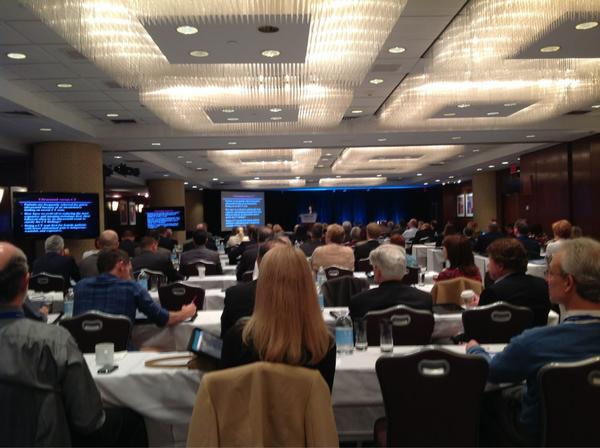
The American College of Emergency Physicians (ACEP) meeting had more ultrasound lectures and workshops than ever before with a turnout at the ACEP US Section that was more than any other (although I dont have the exact numbers, the ballroom it was held in was huge, and those who came late had to stand because all the seats were filled). ACEP was amazing. period. From the great lectures/workshops (even the on-site resuscitation of an emergency physician who went into cardiac arrest in the lobby of the convention center (revived by fellow emergency physicians through use of the handy-dandy convention center defibrillator to then have his heart checked for cardiac activity by Dr. Chris Fox with the ultrasound machine he was using during his workshop, which was happening right next to that location) and the Aurora Mass Casualty Response Video, (also seen here), which was one of the most moving videos I’ve seen about emergency response, teamwork, and humanity (I’ve said this many times, but Ill say it again – I LOVE my job – but even better than that, I love those who I do my job with – side-by-side – and what a privilege to be able to feel that way) to everything inbetween and afterwards, ACEP was once again a success.

The Association of American Medical Colleges (AAMC) meeting in San Francisco was equally amazing, particularly with regard to the future of medical education, discussing the concept of the flipped classroom, and the time given to discussing the incorporation of bedside ultrasound into medical education for medical schools – with the first ultrasound workshop being held in its history lead by the “God’s of Ultrasound in MedEd” (that’s my term of choice)  -Drs. Richard Hoppmann (Univ South Carolina), Chris Fox (UC Irvine), and Michael Blaivas (all of whom will be at the World Congress: Ultrasound in Med ED)…. with help from ultrasound educators from Wayne State, Ohio State, and Stanford (yup, little ‘ole me again and my star medical student models). There was even a separate day at Stanford where a 60 minute slot was given to discussing The Stanford 25 (by none other than Stanford’s Dr. Abrahim Verghese himself) and one of it’s aspects, Bedside Ultrasound (by one of our ultrasound team members, Dr. John Kugler, an internal medicine doctor who is starting to incorporate ultrasound into internal medicine residency education – yup, it’s spreading!! – and it’s about time!). No tweets on this conference, but the above should be stated anyway.

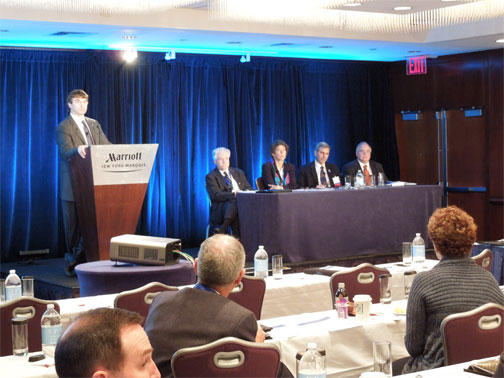
The Ultrasound First conference went on with tweets happening every hour! I was unable to attend this one, but so happy that my twitter friends did. It is obvious that 2013 truly is the year of ultrasound. Spreading to medical education, being a multi-disciplinary educational and practical tool, and having a united voice on its value were all discussed – in addition to some pearls on the hot topics including pelvic ultrasound and MSK ultrasound, as well as how ultrasound is becoming an acceptable tool for renal colic and breast masses.

Since I learn from all my Twitter friends, I figured the best way to share is to take out the middle person (yes, Im talking about me). That way you could get it from their own words: Here are only a few posts from #ACEP12  and #US1st that made me go “Hmmmm….” – with a little commentary every now again from me, because I just can’t NOT give my opinion – I know that’s shocking to those of you who know me. Heehee. My tweets are in here as well.

ACEP:

From @USEDCDN : Emergency US management course  “From Blaivas: Starting to see 1st lawsuits for lack of US use in vascular access” – This definitely sparked my attention – lawsuits for LACK of US use?? Wow, well the standard of care is changing, and if a proven tool to minimize complications is right next to you and you dont use it and that complication occurs… there’s a legal risk. Learn it, use it, love it and maximize patient safety.

Also from  “@USEDCDN: EUS MC Resnick: Emergency US is not an extension of physical exam. Big difference. It answers clinical questions.” Ok, this needs mention, but I already posted a rant about this – of course – so will not bother you with another rant… not right now, at least.

From @jeremyfaust  – “Weingart: 4. When is CPR futile? End tidal < 10 after 10 min. Confirm with US #acep12.” Enough said – and honestly, anything that Scott Weingart says, i will believe. period.

“Rice #ACEP12 echo in cardiac arrest- can see if cause PE/tamponade, or if standstill or beating heart. Look or you may waste time/resources” and “echo and IVC in critical patients: LV fxn, IVC collapse, RV size, contractility- will differentiate PE, CHF, hypovolemia, hypervolemia” – you never know what you may find, and what may be an intervention that you didnt think of until you saw your ultrasound (ie. tpa in a dilated RV).

@bedsidesono: lung #ultrasound talk from ACEP athttps://vimeo.com/51212231  brush up on A-Lines, B-Lines, lung sliding and more…#FOAMed” – what a giver he is! Stone is one to listen to, hear his opinion, and read his immense amount of publications.

Point of care US dominating new speakers forum so far at #ACEP12! Msk, soft tiss, pleural…”

Congrats @GeriaSonoMD on being new Chair of #ACEP12 US section mtg. Our fellow, Viveta Lobo said you talked her into EM. Awesome. So thx!

Raj Geria – new #ACEP12 US section Chair! Highest priority: pathway to US fellowship accreditation : to ensure safety and quality

Find @SAEMAEUS on twitter and follow to see what’s new with the ACademy

Nova panebianco at #ACEP12 taking about SAEM Academy of Emerg US and SonoGames – also subcommittees they are involved in..

A great resource from the new academy of emerg US : http://SAEM.org/academy-emergency-ultrasound-resources …

Resa Lewis #ACEP12 US section mtg- talking ACGME US milestones and how ACEP can help in achieving them for all residencies

Blaivas #ACEP12 – TEE will show potential causes of hypotension & shock ..Valvular dz..And can be electrically linked :pace & defibrillate. No need to interrupt chest compressions for TTE as can see what’s happening with heart from across rm c TEE. Can use TEE when bad view on TTE or unable to do TTE due to habitus, lung dz, chest compressions. TEE can assess quality of chest compressions too. TTE can tell you if there is standstill, clot in RA, dilated RV, tamponade, and to see a beating heart. TTE (echo) better than checking for pulses for need for chest compressions. AAMC mtg in SF! Spreading to med schools!. WINFOCUS and AIUM EM and crit care goals… Going global!

http://Sonocloud.org  and http://sonoguide.com  : 2 great online resources for images and education! – plus the test: http://emsono.com
@sinaiemus: Rob Blankenship at Ultrasound section meeting: over 56,000 ACEP US tests completed at http://www.emsono.com/acep/ACEP_EUS_Exam.html … #ACEP12
Congrats Vicki Noble and @ultrasoundpod for your well deserved award for your contribution to emerg ultrasound!!
Ultrasound First Forum:
  1. Jason T Nomura MD @Takeokun “To engage the patient groups you need people who are interested in patient advocacy not just the disease state. 
  2. View image on Twitter
  3.  Jason T Nomura MD @Takeokun “Lev demonstrating high res eval of ankle tendons with dynamic scanning for function, something that can’t be done with MRI 
  4. Jason T Nomura MD @Takeokun “Nazarian MRI does not have the resolution to evaluate the fibrillar pattern of the Achilles compared to US. 
  5. Jason T Nomura MD @Takeokun “Hoppmann- if education and integration of US starts in medical school it can change the paradigm. 
  6.  Jason T Nomura MD @Takeokun “Hoppmann has graduated several classes of medical students who had US integrated into their med school curriculum. 
  7. Jason T Nomura MD @Takeokun “Moreau most common imaging modalities for Team USA is X-ray and US, very little CT use.
  8. Mike Stone @bedsidesono “Levon Nazarian at  speaking on MSK imaging. It’s not just more convenient than MRI – higher res, no contraindications, pt’s prefer it”
  9.  Jason T Nomura MD @Takeokun “Nazarian US for sports med is portable to get the technology to the field and locker room, MRI not portable. 
  10. Jason T Nomura MD @Takeokun “Pellikka 2011 joint guidelines from ACC,ASE, ACCP and others about the appropriate times to use echo in the assessment of pts. 
  11.  Jason T Nomura MD @Takeokun “Moore bringing up the ASE and CV Anes guidelines for US guided vasc access. Advocates real time US guidance 
  12. Mike Stone @bedsidesono “Leslie Scoutt from Yale – ACR appropriateness criteria for recurrent renal colic – US & Noncon CT equal ratings 
  13.  Jason T Nomura MD @Takeokun “Scoutt 50% of pts with renal colic will likely have another episode.  that rad exp can build up.”
  14.  Jason T Nomura MD @Takeokun “Scoutt noncon CT is the “gold standard” for renal colic imaging in the US currently.  but there is the rad “risk.
  15. Joshua Copel @jacopel “Lynn Fordham (Pedi Rads) US optimal for pyloric stenosis now. No more need for upper GI or other radiation. 
  16. Jason T Nomura MD @Takeokun “Fordham N/V can be pyloric stenosis, malro, intussusception, and gastroenteritis. US for dx.
  17.  Jason T Nomura MD @Takeokun “IOTA group from Europe with close to 2,000 pts showed very good discrimination of malignant vs benign ovarian mass on US. 
  18. Jason T Nomura MD @Takeokun “IUD placement or misplacement easy to note on US; can present for DUB and pain. t
  19. Jason T Nomura MD @Takeokun “Advances to 3D US allows volumetric imaging that could only be done previously with CT or MRI. But US spares the radiation of CT 
  20. Joshua Copel @jacopel “ Dr. Beryl Benacerraf making case for US over CT, MR in female pelvic imaging at forum. pic.twitter.com/vCQYvpi8 View image on Twitter
  21. Jason T Nomura MD @Takeokun “ is not only about when &where US can be used but education for practitioners and patients per @AIUMPresAlfred
  22. Jason T Nomura MD @Takeokun “@AIUM_Ultrasound represents 9,200 members from 36 specialties with a focus on advancing US use 
  23.  Joshua Copel @jacopel “ opening of US First forum now at Marriott NYC. Over 100 attending from medical profs, industry, payors. Very exciting & energetic”
  24.  Jason T Nomura MD @TakeokunIt does seem to be a who’s who of US at the reception.

SonoSocial: Social Media in EM Ultrasound Education – check out what’s out there!

Happy Monday everyone! Im sure you love mondays as much as we do, so i thought I would post something that would be a bit of positivity and highlight a group that I believe in: ACEP Ultrasound Section. 2013 is the YEAR OF ULTRASOUND – and for good reason – there are only a few tools that give us such immediate information that can save a life. The ACEP US Section is the go-to site for everything you want to know about starting an US program, credentialing in ultrasound, the policies and politics, and is the home of SonoGuide – an amazing educational resource for bedside ultrasound, and the EMSONO: Ultrasound Test. It is also where we add our entries for their newsletter that goes over tips and tricks, cases, and all things ultrasound in the news. We recently wrote an article for the ACEP Ultrasound Section Newsletter – which is available for all members of the ACEP US Section – and I highly recommend becoming a member – it’s totally worth it. It is my go-to guide for all things bedside ultrasound. I thought to entice you, i would include our latest entry below – with a few additions in the end as it was written a few months ago and there have been more educators/bloggers since it’s publication: For a set of links to online education in bedside ultrasound, go here.

Social Media in EM Ultrasound Education by Drs. Viveta Lobo, Laleh Gharahbaghian

Stanford University Medical Center

In a realm where the access to free education, is becoming the mantra and expectation across learners, the emergence of social media is fast gaining popularity. A quick Google search, defines social media as, “a media for social interaction, using highly accessible and scalable publishing techniques.” As a physician, educator, and learner in an academic institution, this modality of education promises to bestow unending means. Being able to have a presence 24/7 and allow access to learning at the convenience of learners is almost too good to be true. It is no wonder why higher education across the globe, and now even primary education has adopted social media as the forefront modality to reach and connect with learners.

The medical field is no exception. As we begin to recruit the most “tech savvy” group of students in our medical schools and residencies, the expectation to continue learning “on the cloud” is ongoing. Tweeting anatomy pearls, sharing Dropboxfiles on physiology notes, and joining Google hangouts for journal clubs – is quickly becoming the theme for most educational sites. And why shouldn’t it be? Being able to remotely participate in learning and connect with peers anywhere in the world, from your home, office, or emergency department, can only lead to extraordinary things.

Emergency medicine has rightly developed a reputation for being progressive and innovative. Emergency ultrasound lends itself to be the perfect subset to thrive with social media, and it has taken off! Being able to upload ultrasound clips online and teach anatomy, highlight pathology, and reward “great saves” for not just your own institution, but the entire ultrasound community goes way beyond the classroom. Websites, Blogs, Podcasts, Facebook group pages – whatever your fancy, its there – and it’s free. Our goal, has always been to try, learn, fail, succeed – but at the end, share. There is no better way to share than by using social media. Being able to connect all across the globe with other EM US enthusiasts, interact and discuss various topics and strategies has only helped us all do better, within our sub specialty and beyond. So don’t be skeptical, and give it a try! We’ve listed some of our favorite FREE picks, in no particular order, to help you get started…. There are plenty more out there….Until next time – see you on the cloud!

Websites for Online Education/Didactics in Bedside Ultrasound:

Sonoguide: Ultrasound Guide for Emergency Physicians – offers a description of each bedside US application, ultrasound images and videos – all to train and review US utility for aiding diagnosis, management and treatment by Dr, Beatrice Hoffman

SonoWorld – a comprehensive site that includes hundreds of lectures, cases, videos, and articles that includes basic bedside ultrasound applications, but goes beyond that to satisfy the needs of all US enthusiasts.

Emergency Ultrasonography – a comprehensive website geared to emergency physicians that contains many lectures, cases, and educational content that can be used by residencies for the didactic portion of ultrasound education by Dr, Geoff Hayden.

SAEM Ultrasound Narrated Lectures – just as it states, a library of lectures on bedside ultrasound with a link to a free pdf of ultrasound guides on that same site.

Sinai EM Ultrasound – a complete site of free online lectures, cases, research articles, and news on bedside ultrasound topics by Dr. Bret Nelson.

Society of US in Medical Education – learning modules and curriculum databases with a long lecture list on all basic bedside ultrasound topics that allows the learner to control the pace of the lecture.

Vanderbilt’s EM Ultrasound – a collection of brief lectures on each bedside ultrasound topic in a well-organized way with quizzes that can be taken to test your knowledge by Dr. Jim Fiechtl

ICU Sonography lectures for Echo/IVC and more by: Beth Israel, Stanford, and Yale

Online Textbooks on Bedside Ultrasound:

European Federation of Societies for Ultrasound in Medicine and Biology (EFSUMB)– a free and comprehensive European full textbook found online for free on each ultrasound application

Partners In Health Textbook for Ultrasound in Resource Limited Areas – by Drs. Sachita Shah, Dan Price, Gene Bukhman, Sachin Shah, Emily Wroe

iBook for the iPAD – a new textbook brought from the Ultrasound Podcast guys and written by many US educators sure to bring a new concept to the world of online education – The iBook and all it’s glory: http://www.youtube.com/watch?v=mB7_omzi8Cc

Podcasts on Bedside Ultrasound:

Ultrasound Podcast – one of the best, and funniest ways of teaching ultrasound to all learners. This podcast discusses all ultrasound applications, keeps it easy, and makes it engaging by Drs. Mike Mallin and Matt Dawson, with Stone’s side excerpts from Dr. Mike Stone.

UC Irvine’s iTunes lecture series – an excellent and comprehensive lecture podcast library of all bedside ultrasound applications by Dr. Chris Fox.

Soundbytes – a collection of free lectures for all bedside ultrasound applications in a concise and free format by Dr. Phil Perera.

Blogs on Bedside Ultrasound:

SonoSpot: Topics in Bedside Ultrasound – a blog that discusses tutorials, cases, tips/tricks, research, links/sites, and people in the ultrasound community by Dr. Laleh Gharahbaghian (yes, shameless plug here).

Bedside Ultrasound – Ultrasound teaching updates with tips/tricks and brief video lectures of the hot topics in bedside ultrasound and interviews with US enthusiasts by Dr. Mike Stone.

Highland Hospital ED Ultrasound – a collection of blog posts that focus on procedural US guided applications in addition to the basic US application by Dr. Arun Nagdev and Andrew Herring

Ultrasound videos & clips:

Sonocloud – the ultimate library of ultrasound clips – an amazing free image upload and download site where you can find any ultrasound clip you need to review, place in your lecture, or use to learn and teach others by Drs Mike Mallin, Matt Dawson, and Mike Stone.

Vimeo: US in Emergency Medicine and Critical Care group – a large collection of ultrasound clips for your viewing pleasure of pathologies, normal anatomy, and more by the HQMedEd (high quality medical education) team at Hennepin County Medical Center

There’s an App for That! – free Smartphone apps for bedside ultrasound

1-Minute Ultrasound – by the Ultrasound Podcast guys for your iPhone, with 1 minute reviews of all applications in an easy to learn way.

SonoAccess – a list of lectures and images in a smartphone app by SonoSite

Twitter accounts to follow for bedside ultrasound teaching topics: 123SonographyAIUM_Ultrasound, AllUltrasound, Bedsidesono, BMUS_Ultrasound, ECCUltrasound, EchoCardiac, EDUltrasound, EDultrasoundQA, EM Res, GeriaSonoMD, SAEMAEUS, Sinai EM Ultrasound, SonoSpot, SUSME, UltrasoundFirst, UltrasoundMeme, UltrasoundPod, Ultrasound Training, Ultrasound Quarterly, USEDCDN

Other SonoBelievers who contribute to ultrasound education through their blogs/tweets:

Academic Life in EMLife in the Fast Lane, EMCRIT, CriticalCareNow, HQMedEdSonoCaveSonoIntensivist, WesternSono, TeresaWuMD, ChrisPartyka, AriKestler, CurroMiralles, Radiopaedia, EMCurrents, Jason T Nomura, Squartadoc, AndyNeill, EMManchester, EMBasic, AllUltrasound, BroomeDocs, M-Lin, EMEducation, EMChatter, Precordialthump, I_C_N, MDAware, EMIMDoc, jvrbntz, SandnSurf, IMEducator, keeweedoc, LWestafer, ERCast, DocWagz

A new, up and coming site for free, fun-incentivized global medical education through cases, questions, images (including ultrasound): Global Medical Education Project

I know…. a big family!… and I guarantee you Im missing a few, but there will be even more in 2013: The Year of Ultrasound.

SonoStudy: CT vs Ultrasound, Community vs Academic Ctr – kids evaluated for appendicitis

In a recent Mescape news article, a topic near and dear to my heart (and, yes, I know I have a lot of them – but decreasing radiation exposure, length of stay, and health care cost are a few), there was a study highlighted that compared community practice versus academic practice in the evaluation of children with abdominal pain that required imaging for ruling out appendicitis. It basically states that community practice do more CT scans and the results are less sensitive. Ive copied the article below, but it got me thinking…. there are quite a few factors that are different in community practice from academic practice and I wonder if they bias these results. Some community practice groups do perform published research studies, but academic centers are well known for being the research hub – does that mean they are more in tune with the talk around town? or that they are more progressive? Well, that can be argued as quite a few academic centers may seem like they are resistant to change. Also, is ultrasound available 24/7? Many community practice centers do not have access to ultrasound outside of business hours, and I know that a few academic centers are also ultrasound-openic overnight. The radiologists who read these studies may not even be in the same country as out-sourcing has become more common than ever before. Would that decrease the sensitivity? It’s hard to say, but I doubt they would be in demand if they made that many mistakes. Surgeons are more reluctant to take a patient to the operating room without a CT-proven appendicitis and emergency physicians are less likely to discharge a patient without a clear diagnosis for right lower quadrant pain. Do any of these factors play into this? Hmmmm…..well, in a prior post about a study done on ultrasound versus CT, the numbers suggest that change is needed…. somewhere along the line of the work up.

“Community hospitals are more than 4 times more likely than pediatric institutions to use radiation-exposing computed tomography (CT) scans and 80% less likely to use ultrasound for pre-appendectomy evaluations in children, study results suggest. Jacqueline M. Saito, MD, MSCI, and colleagues from Washington University School of Medicine in St. Louis, Missouri, also found that both diagnostic tools were less sensitive for appendicitis in the community hospital setting. As previously reported by Medscape Medical News, CT screening of children with abdominal pain has skyrocketed while appendicitis rates remain unchanged, adding to growing concerns regarding the link between excessive radiation exposure and cancer risk later in life. “Broadly-applicable strategies to systematically maximize diagnostic accuracy for childhood appendicitis, while minimizing ionizing radiation exposure, are urgently needed,” the authors write, noting that evaluations may be streamlined by using algorithms developed with broad validity to decrease reliance on preoperative imaging and radiation exposure while avoiding unnecessary hospital transfers, admissions, operations, and missed diagnoses. The retrospective study was published online December 24 in Pediatrics.

For the study, researchers reviewed the records of 423 children who had undergone surgery for presumed appendicitis. Preoperative imaging was performed in 93.4% of cases; final diagnoses included acute appendicitis (69.0%), perforated appendicitis (23.6%), and normal appendix (7.3%). After adjusting for age, sex, race/ethnicity, body mass index, symptom duration, and white blood cell count, researchers found that children initially evaluated at a community hospital were 4.4 times more likely to have undergone a preoperative CT scan (odds ratio [OR], 4.37; 95% confidence interval [CI], 1.70 – 11.19; P = .002) and 80% less likely to have had an ultrasound performed (OR, 0.20; 95% CI, 0.07 – 0.58; P = .003) than those at a pediatric facility. About 15.1% of children underwent both ultrasound and CT before surgery, particularly if they were girls (OR, 4.51; 95% CI, 1.47 – 13.82; P = .008) or had a lower body mass index percentile (OR, 0.98; 95% CI, 0.96 – 1.00; P = .03), longer symptom duration (OR, 1.81; 95% CI, 1.15 – 2.86; P = .01), or lower white blood cell count (OR, 0.87; 95% CI, 0.78 – 0.97; P = .01). Most children undergoing both tests had the ultrasound first (46/64, 71.9%), and normal/indeterminate results were followed up with CT (OR, 17; 95% CI, 7.7 – 37.0). Although high overall, CT scans performed at pediatric hospitals tended to be more sensitive for any appendicitis and for perforated appendicitis than those done at community hospitals (98.8% vs 93.4% [P = .07] and 75.0% vs 49.0% [ P = .045], respectively). Sensitivities were highest for older children (aged 13 – 18 years) and those not obese; insufficient numbers of underweight children were available for analysis. Accuracy of ultrasound for diagnosing appendicitis was found to be moderate in the pediatric hospital setting (weighted κ, 0.36; 95% CI, 0.24 – 0.48) and highest among older children (aged 13 – 18 years; weighted κ, 0.38; 95% CI, 0.22 – 0.54) and boys (weighted κ, 0.40; 95% CI, 0.21 – 0.55); rarity of use in community hospitals precluded any evaluation of ultrasound sensitivity in this setting. “Variation in diagnostic imaging use for pediatric appendicitis by initial evaluation location might stem from multiple factors, such as availability of imaging or the perceived need for diagnosis confirmation,” the authors comment, noting that ultrasound may be less available in community hospitals and that emergency physicians may have low risk tolerance for pediatric diagnostic errors and malpractice claims, preferring to place their confidence in CT scans.” Pediatrics. Published online December 24, 2012. Abstract

This has been talked about in further studies, as the ED length of stay can be reduced when utilizing US, instead of CT

2012 in review for SonoSpot – Thanks for the support! Happy New Year!

100 posts, 23,000 views from 119 countries!?! Wow! One year ends, another year begins. This time always comes every year when we look back on all that made us feel happy, sad, and like jumping up and down in sheer joy and excitement. Believe it or not, SonoSpot started just a meer 7 months ago, and it has been a place where we can share, highlight, and illustrate all aspects of bedside ultrasound – through our blog, twitter newsfeed, and facebook posts. With every post, comment, debate, and communication you should picture me jumping up and down because I get to do what I love – work with amazing people, educate and learn from others (and that includes all of you who post/tweet/blog/podcast/hangout/etc – thanks for making me smarter), and spread the gospel of ‘sound to the masses! It has been a true pleasure, and I thank you, from the bottom of my heart, for the support.

2012 annual report for SonoSpot. These numbers are huge to me – blows my mind, actually. Now, I know others are in the millions, as they should be –  they are incredibly amazing – they are all like mama and papa bears to me (the brown-haired step child), but starting with this kind of support makes me giggle and shake in excitement!  And, it wouldn’t be possible without you. Thank you so much! –  for reading, for sharing, for wanting to learn bedside ultrasound – and a huge thanks to all those who educate/research/share their cases/experiences with it as well. i will continue to highlight your work always.

“You complete me.” – Tom Cruise in Jerry Maguire

In just a short 7 months:

4,329 films were submitted to the 2012 Cannes Film Festival. This blog had 23,000 views in 2012. If each view were a film, this blog would power 5 Film Festivals.

In 2012, there were 100 new posts, not bad for the first year!  The busiest day of the year was August 15th with 352 views. The most popular post that day was SonoStudies: Ultrasound First for Appendicitis, the gift that keeps on giving…..

119 countries in all! Most visitors came from The United States. Australia & Canada were not far behind.

Attractions in 2012

These are the posts that got the most views in 2012.

In 2013 SonoSpot hopes to bring you even more:

– Complete SonoTutorials on all applications for bedside ultrasound

– SonoReference lists linking back to the research study

– SonoLectures – a 5 minute review of each application

– Advance and enhance the SonoMedStudent and SonoGlobalHealth sections

– and more SonoCases, SonoStudies, SonoTips&Tricks that show how bedside ultrasound can quicken diagnoses, change management, and save a life.

SonoCase from EPMonthly: 19 yr old with food poisoning? hmm….by B. Pregerson and T. Wu

Merry Christmas everyone! For your reading pleasure this week, Id thought we would discuss a case whose topic is near and dear to my heart. In the most recent issue of EPMonthly, there is a great case and interesting “internal” discussion made quite humorously public by Drs. Pregerson and T. Wu of a young healthy male with right lower quadrant abdominal pain after eating at a “Roach Coach”…. which just so happen to have the best breakfast burritos, but I digress… The case discussion involves how the history and physical may help, how labs may (or may not) help and how an ultrasound can be of use to make you and your surgical colleagues feel better in taking the patient to the OR. There was a recent post on SonoSpot about ultrasound in appendicitis sharing data from a study about the CT findings when US “equivocal” cases arise.  When the ultrasound is positive – how great is that?! Quite a few studies recently on the topic and some of the more recent ones can be found here.

The case is followed by an extensive (and great) discussion of the technique, pearls and pitfalls of ultrasound in evaluating the appendix – because we all know there are quite a few. As far as the sensitivity ad specificity go, they state it best:

“Sensitivity & Specificity: Both the sensitivity & specificity of ultrasound for appendicitis are less than that of CT. In pediatrics the values are about 88% and 94% respectively, and in adults about 83% and 93%. (These numbers may vary depending on the experience of the ultrasonographer.) There are studies from Europe and Israel where they have used the “ultrasound first” approach for many, many years that show even better test characteristics. These values are actually not that bad when compared to CT scan whose sensitivity and specificity are around 94% and 95% respectively. Remember, however, that the performance characteristics for ultrasound can be significantly worse in overweight patients or those with overlying bowel gas. In addition, if the appendix is retrocecal or is lying in a difficult anatomical plane, the study will be more challenging.  Unfortunately, you may still have to do a CT scan if your ultrasound is non-diagnostic and your clinical suspicion is moderate to high, but the strategy of ultrasound first would likely decrease CTs by about 50%.”

And in kids…”You should be aware of the most recent recommendation of the American College of Radiology from the “Choosing Wisely” campaign, which states, “Don’t do computed tomography (CT) for the evaluation of suspected appendicitis in children until after ultrasound has been considered as an option.” Although CT is accurate in the evaluation of suspected appendicitis in the pediatric population, ultrasound is nearly as good in experienced hands. Since ultrasound will reduce radiation exposure, ultrasound is the preferred initial consideration for imaging examination in children. If the results of the ultrasound exam are equivocal, it may be followed by CT. This approach is cost-effective, reduces potential radiation risks and has excellent accuracy, with reported sensitivity and specificity of 94 percent.”

To diagnose appendicitis: look for a noncompressible a-peristaltic structure that attaches to the cecum that is larger than 7mm in diameter.

Screen shot 2012-12-23 at 8.58.46 PM

A great tutorial of ultrasound for the appendix can be found here by the UltrasoundPodcast guys:

SonoProcedures: Review of ultrasound-guided procedures, technique, and videos

In the most recent addition of Emergency Medicine Clinics of North America (yup, you’ll need to register to view), some big wigs in bedside ultrasound (Tirado, Teresa Wu, Resa Lewiss, Vicki Noble, Adam Sivitz) published an article reviewing the ultrasound – guided techniques (with images) of procedures where an ultrasound machine can make all the difference in decreasing complications, increasing patient satisfaction, and decreasing time of procedure. From pericardiocentesis, thoracentesis, abscess drainage to lumbar puncture, arthrocentesis, and foreign body removal, these physicians discuss it all. “Bedside ultrasound is an extremely valuable and rapidly accessible diagnostic and therapeutic modality in potentially life- and limb-threatening situations in the emergency department. In this report, the authors discuss the role of ultrasound in quick assessment of pathologic conditions and its use to aid in diagnostic and therapeutic interventions”

In the same issue, Drs. Tirado, Nagdev and others discuss ultrasound-guided venous central and peripheral venous access and nerve blocks (a topic near and dear to Arun Nagdev’s heart – given how many publications he has done on the topic – a true expert!). “Ultrasound has rapidly become an essential tool in the emergency department, specifically in procedural guidance. Its use has been demonstrated to improve the success rate of procedures, while decreasing complications. In this article, we explore some of these specific procedures involving needle guidance and structure localization with ultrasound.”

And, in the same issue, Drs. Lewis, Crapo, and Williams discuss more procedural guidance using bedside ultrasound for central venous access as well as a review of other procedures, like IO lines an arterial lines. “The venous and/or arterial vasculature may be accessed for fluid resuscitation, testing and monitoring, administration of blood product or medication, or procedural reasons, such as the implantation of cardiac pacemaker wires. Accessing the vascular system is a common and often critically important step in emergency patient care. This article reviews methods for peripheral, central venous, and arterial access and discusses adjunct skills for vascular access such as the use of ultrasound guidance, and other forms of vascular access such as intraosseus and umbilical cannulation, and peripheral venous cut-down. Mastery of these skills is critical for the emergency medicine provider.”

A great review of pericardiocentesis, thoracentesis, paracentesis, vascular access, foreign body localization, abscess drainage, and nerve blocks can be found on Sonoguide as well.

Here are some great videos on how-to perform the varying procedures:

Pericardiocentesis:

Thoracentesis:

Paracentesis:

Abscess drainage:

Central venous access: internal jugular

Central venous access – supraclavicular approach to the subclavian vein:

Ultrasound Podcast on the Subclavian and Supraclavicular venous access in only the way they know how.

Central venous access – axillary vein cannulation

Peripheral venous access:

A great video on US guided Peripheral IV can be found here, by HQMedEd

Lumbar puncture:

Foreign Body removal:

Femoral nerve block:

Axillary Nerve block:

Distal Sciatic nerve block:

Nerve blocks of all kinds can be found here on SonicNerve.

Other procedures:

US guided fracture reduction


SonoTutorial: Musculoskeletal Ultrasound of the Tendon – an AIUM Sound Judgement Series

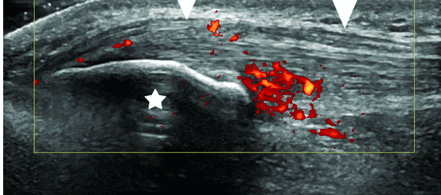
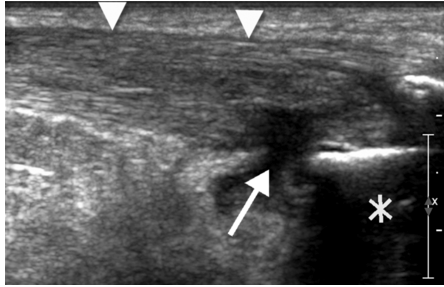
In the recent entry of the Journal of Ultrasound in Medicine, Dr. Ken Lee (MSK radiology), discusses how ultrasound of the tendon can add to your clinical work up of a patient with pain in that area. it is the most common sports-related injury and we see it in the emergency department all.the.time.  In a prior post, we highlighted how Dr. Brita Zaia evaluated a patient with knee pain and tenderness who came to the ED for an arthrocentesis, showing the patellar tendon abnormality on her ultrasound image, making her diagnosis without the need of that invasive procedure (Published in WestJEM).

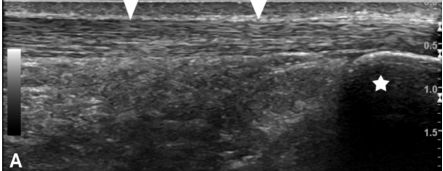
“Common tendon abnormalities include tendinopathy and tendon tears, which impose a substantial cost to society in the United States and abroad. According to the American Public Health Association, tendon disorders account for approximately $850 billion per year in health care costs and indirect lost wage expenditures.4 Accurate and timely diagnosis of musculoskeletal tendon injuries is critical to ensure proper treatment and thus minimize societal costs. Magnetic resonance imaging (MRI) has been the imaging standard for musculoskeletal injuries. However, MRI is costly and overused.5 Improvements in ultrasound technology have made sonography a rapidly growing imaging alternative and complementary tool to MRI for the diagnosis of common tendon injuries.6…..The most defining advantage of sonography over MRI is its real-time imaging capability, which allows for dynamic evaluation of the tendon using a variety of stress maneuvers.16,17 For example, in the neutral position, the long head of the biceps tendon may lie normally in the bicipital groove (Figure 3), only to dislocate medially once the arm, with elbow flexed, is externally rotated (Figure 4). In addition to tendon subluxation, other tendon abnormalities diagnosed dynamically include tendon snapping, friction between two structures such as in shoulder impingement,18 and increasing conspicuity of tendon tears while stressing the tendon or with sonopalpation.17 Real-time dynamic sonographic evaluation provides this unique diagnostic ability using controlled movements.”

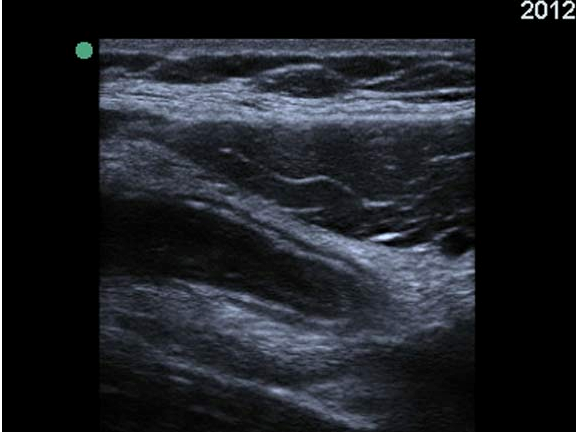
Read more in this article to learn about what it means and what happens when the tendon goes from looking like this:

Screen shot 2012-12-03 at 12.58.39 PM

..to looking like this:

Screen shot 2012-12-03 at 12.58.55 PM

or like this….

Screen shot 2012-12-03 at 12.59.10 PM

with plenty more examples of it, illustrating how awesome it is and why we should use bedside ultrasound to evaluate tendons more.

SonoNews: Radiologists should guide point-of-care ultrasound training? …lets think about this…

In an insert of Diagnostic Imaging, Dr. Michael Blaivas (an emergency physician, past president of ACEP US Section, Section Chair of Emergency/Critical Care for AIUM, and basically about 3 or 4 more titles that would take a few more lines in this post to mention because he is that amazing) spoke about how radiologists have historically been threatened by and become obstructionists in its use by non-radiologists, then became less so as it was apparent that radiologists didnt have the time to do it  – possibly due to radiologist shortages and becoming focused on CT and MRI (according to Dr. John Cronan – chair of Radiology at Brown Univ), and now are not involved or part of the team with point-of-care ultrasound training – but they should be, according to Blaivas in this article by Sara Michael. However, this article concludes the wrong thing – in my opinion – and has misunderstood Blaivas’s point. Instead they reaffirm the angst felt by radiologists today and fail to explore why. Radiologists have submitted a “National Curriculum” for medical student education in ultrasound as well, that has come to add to further controversy as there are no other specialties involved in the discussion…. But, of all the medical student US curriculums out there, most, if not all, are coordinated by non-radiologists.

“Point-of-care ultrasound has become ubiquitous in medicine, from emergency departments to OB and trauma surgery. But that doesn’t mean it’s taking the modality away from radiologists.In fact, radiologists should be the ones guiding its training and promotion – not bemoaning and pushing back on the trend. “Radiologists are not involved in ultrasound education and promoting its use in point of care or elsewhere, but it would be nice to have more involvement,” Michael Blaivas, MD, an emergency medicine physician and past chair of the American College of Emergency Physicians ultrasound section, said during a presentation at RSNA 2012 this week. “It’s better to be seen as proponents of an application, guide it, and help with it, especially an application that is seen as critical at the bedside.” Radiologists are the ultrasound imaging experts, Blaivas said, and should be the first to share their expertise. The specialties shouldn’t be fighting each other, he said, but working to make sure the modality thrives for all clinicians. If radiologists were more involved in teaching, they could ensure quality in its use. “There really is a need for ultrasound education, and this is somewhere we can meet,” he said.”…”Today, [Dr Cronan] said, radiologists are “working feverishly to protect our income,” and the profession faces threats of commoditization with the rise of teleradiology and service-live imaging. Although ultrasound is likened to the stethoscope in its extension of the physical exam, Cronan noted, it’s used by many, understood by few.”

Ive been thinking a lot about it recently, and trying to understand radiologists’ continued angst about non-radiologists performing point-of-care ultrasound. I’ll start with these few points: radiologists do perform ultrasound studies – both limited and complete – and that hasn’t and shouldn’t change, they ARE imaging specialists. I do rely on them when my point-of-care ultrasound shows that a complete ultrasound study or a CT scan is needed. Many radiologists do not see the ultrasound studies that non-radiologists perform or how they are quality assured, and the fear of the unknown can drive quite a few political decisions. They have not been involved in point-of-care ultrasound training either, and this, in combination with the above, will give even more angst. I do agree, they SHOULD be a part of the education (and I know some will disagree with me) – this will have those who perform point-of-care ultrasound learn more techniques (with the applications that are also performed by radiology) and the radiologists will learn/see what we do, how we do it, and why it’s so important for us (and our patients) at the bedside. They will see that our images are actually quite good and that our QA and training direction is strict enough through our ACEP guidelines. Should they be in charge of it’s training? I dont think so. Is it an extension of the physical exam? No, it’s so much more than that. Here’s what keeps coming into my head:

1. The AMA passed a resolution that states ultrasound does not belong to any one specialty, but it can be incorporated into any specialty as defined by that particular specialty – later to also have a resolution that ultrasound is safe, effective, and efficient when used under the direction of an appropriately trained physician and should be supported in its educational efforts when integrating into medical education.

2. Many of the point-of-care ultrasound applications are not ordered/performed through radiology. Before emergency medicine and critical care docs started performing bedside ultrasound, they did not order an orbital ultrasound, an IVC ultrasound, a musculoskeletal ultrasound, a soft tissue ultrasound, an Aorta ultrasound, a cardiac ultrasound, a thoracic ultrasound, a procedural guided central or peripheral venous ultrasound…. through radiology. And, cardiologists did their echoes, OBGYN docs did their pelvic ultrasound over the last 15-20+ years, and, for the most part, trauma teams performed their own FAST scans.

3. Time matters. When there is a patient in shock, a crashing (or stable) trauma patient, and a patient who is acutely short of breath or with acute chest pain or acute abdominal pain or acute pelvic pain or with acute vision loss… and any procedure where ultrasound is needed…. we rule emergent conditions in and out and get that procedure done, quickly.

We need to have this conversation with our radiologists, let them know of our QA process, educate them on the way and the reasons we perform bedside ultrasound, and alleviate their (and all of our consultants’) angst about our ultrasound studies. The team approach to ultrasound training for medical students is very important, and they should be a part of that.

SonoStudy: US-guided lines by nurses (& docs) reduce need for physician intervention (& central lines!) for difficult access

A recent study, from the Journal of Emergency Medicine, by Weiner et al at Tufts University, in addition to so many of the prior studies, proves that nurses SHOULD perform ultrasound guided peripheral line placement. they are good at it, they do it right, and they do it well. Oh, and patients love it.

“Emergency physicians (EPs) have become facile with ultrasound-guided intravenous line (USIV) placement in patients for whom access is difficult to achieve, though the procedure can distract the EP from other patient care activities…..A prospective multicenter pilot study: Interested emergency nurses (ENs) received a 2-h tutorial from an experienced EP. Patients were eligible for inclusion if they had either two failed blind peripheral intravenous (i.v.) attempts, or if they reported or had a known history of difficult i.v. placement. Consenting patients were assigned to have either EN USIV placement or standard of care (SOC).” 50 patients enrolled, 29 assigned to USIV and 21 to SOC. “Physicians were called to assist in 11/21 (52.4%) of SOC cases and 7/29 (24.1%) of USIV cases (p = 0.04). Patient satisfaction was higher in the USIV group, though the difference did not reach statistical significance (USIV 86.2% vs. SOC 63.2%, p = 0.06). ”

And, even more recently, another study:

Ultrasound-Guided Peripheral Intravenous Access Program Is Associated With a Marked Reduction in Central Venous Catheter Use in Noncritically Ill Emergency Department Patients.

by Shokoohi et al from George Washington University published in the Annals of Emergency Medicine has been getting quite a bit of press – particularly from MedwireNews: “Training emergency department (ED) staff in use of ultrasound to guide difficult peripheral intravenous catheter placement appears to reduce the unnecessary use of central venous lines, a study suggests. The reduction in central venous line use after the introduction of ultrasound training was particularly notable for patients who were not critically ill, report Hamid Shokoohi (George Washington University, DC, USA) and colleagues…..They say that this has “potentially major implications for patient safety,” noting that around 15% of the 5 million central venous catheters placed in the USA annually result in complications, which can include blood infections, thrombosis, vessel damage, and hematomas.”

The study itself was: “….a time-series analysis of the monthly central venous catheter rate among adult emergency department (ED) patients in an academic urban ED between 2006 and 2011. During this period, emergency medicine residents and ED technicians were trained in ultrasound-guided peripheral intravenous access. We calculated the monthly central venous catheter placement rate overall and compared the central venous catheter reduction rate associated with the ultrasound-guided peripheral intravenous access program between noncritically ill patients and patients admitted to critical care. Patients receiving central venous catheters were classified as noncritically ill if admitted to telemetry or medical/surgical floor or discharged home from the ED. RESULTS: During the study period, the ED treated a total of 401,532 patients, of whom 1,583 (0.39%) received a central venous catheter. The central venous catheter rate decreased by 80% between 2006 (0.81%) and 2011 (0.16%). The decrease in the rate was significantly greater among noncritically ill patients (mean for telemetry patients 4.4% per month [95% confidence interval {CI} 3.6% to 5.1%], floor patients 4.8% [95% CI 4.2% to 5.3%], and discharged patients 7.6% [95% CI 6.2% to 9.1%]) than critically ill patients (0.9%; 95% CI 0.6% to 1.2%). The proportion of central venous catheters that were placed in critically ill patients increased from 34% in 2006 to 81% in 2011 because fewer central venous catheterizations were performed in noncritically ill patients. CONCLUSION: The ultrasound-guided peripheral intravenous access program was associated with reductions in central venous catheter placement, particularly in noncritically ill patients. Further research is needed to determine the extent to which such access can replace central venous catheter placement in ED patients with difficult vascular access.”

A great video on the scanning technique and choosing the right vein can be found here by SonoSite and taught by my good friend, Diku Mandavia:

Another great how-to video can be found here: although long, its a good one for a step-by-step, from the New England Journal of Medicine:

SonoNews: Chest ultrasound for acute dyspnea used by internal medicine…yes!

In a recent publication through Medscape, they site a research article and presentation at the American College of Chest Physicians – in Chest Oct 2012  – stating “With minimal training, internal medicine house staff can successfully use hand-held ultrasound devices in the diagnosis of acute dyspnea.” This is huge! Why? Well, where do I begin? First off, lung ultrasound is advancing like never before – not that it wasn’t already known it was awesome for pneumothorax, pleural effusion, and pulmonary edema, but now the evaluation for pneumonia has gotten a lot of press. Secondly, you have more studies coming out that with minimal training, lung ultrasound can be used by physicians to help diagnose the cause for shortness of breath, which is great and helps get the fear of looking out of the conversation. FInally, and more exciting to me than anything above, is that bedside ultrasound is spreading!!! – to internal medicine (in this posting), but also to involve surgical clinics, sports medicine, pediatrics, and ophthalmologists  – – using bedside ultrasound to aid in their evaluation of their patients.

The article describes: “Ravindra Rajmane, MD, from the New York University Langone Medical Center in New York City, and colleagues reported the study findings in a poster presentation here at CHEST 2012: American College of Chest Physicians Annual Meeting. “The technology of sonography has improved markedly over the past few years,” Dr. Rajmane told Medscape Medical News. “Our study underscores the ease of transporting and effectively applying this technology with minimal training,” she said. “Our residents were able to successfully learn the basics of lung ultrasonography with a 1-hour didactic lecture followed by 1 hour of hands-on training. Unstructured training was also provided during ICU [intensive care unit] rounds.” According to the researchers, acute dyspnea is normally assessed with a combination of history taking, physical examination, electrocardiography, chest x-ray, and lab work. Lung ultrasound is increasingly being used to assess acute respiratory conditions because it is faster, less invasive, and more sensitive.” – Hallelujiah!!!

Keep it spreadin….

Even the OBGYN doctors are learning to use lung ultrasound in evaluating shortness of breath in pregnant patients!

A prior case that evaluated a patient who came in with shock and shortness of breath illustrates a way lung ultrasound can be used to help evaluate, diagnose, and work up your patient and can be find here.