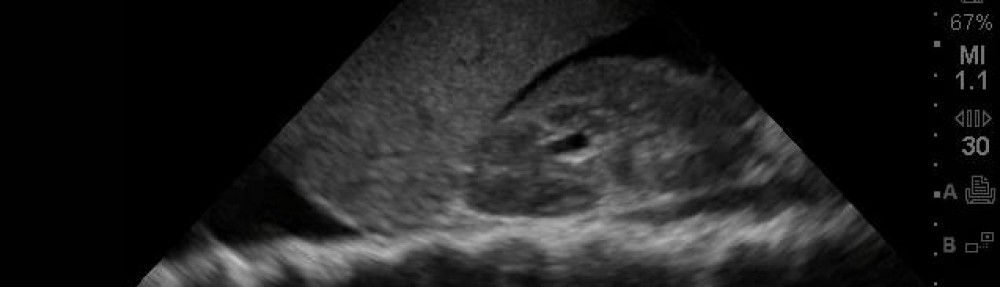
In the current issue of the Archives of Surgery by Berg et al, through the JAMA network, highlighted in the ACEP news , “To our knowledge, the current study is the most complete examination of injury patterns and outcomes in the largest series of blunt thoracoabdominal trauma patients to date,” wrote study investigators Dr. Regan J. Berg and colleagues in the division of trauma surgery and surgical critical care, Los Angeles County + University of Southern California Medical Center in Los Angeles. Blunt trauma was defined as an Abbreviated Injury Score of 2 or more in both the chest and abdomen) who were admitted to the LAC+USC Medical Center between January 1996 and December 2010. They investigated trauma patterns, resulting injuries, need for operative care, and clinical outcomes – – and found that “In cases of blunt thoracoabdominal trauma, the abdomen should be the initial cavity of exploration in patients requiring emergent surgery without direct radiologic data, based on the results of a trauma registry and medical record review of 1,661 patients.”
Category Archives: SonoStudies
SonoStudy: Multicenter: The accuracy of Lung US in diagnosing community-acquired pneumonia
A recent study in the journal, Chest by ReiBig et al. that is getting quite a bit of press lately evaluates the accuracy of lung ultrasound in diagnosing community acquired pneumonia. Why this is cool? It highlights the use of lung US for pneumonia, getting closer to decreasing radiation needs for these patients (ALARA). It’s in Chest by a group of multi-disciplinary physicians (intensive care specialists, emergency medicine, radiologists). Specialists who practice in various European countries. All of that = cool!
What they state:… Continue reading
SonoReview: US-guided Interscalene nerve blocks
Hope you had a Happy 4th! To all those who received patients with an upper extremity that has been burned, fractured, or blown away from all the “legal” fireworks foreplay……
Pain control. Two words. Patient satisfaction. Two more words. Physician satisfaction. Two MORE words. Nerve blocks are the new procedural sedation for many painful procedures we do in the ED. Takes much less resources and time, and provides immediate pain control for however long your anesthetic will work without concern for respiratory distress, hypotension, hypoxia, and… well… death. So why dont we do it more? Well, in a prior post, we have discussed the ins & outs for performing US guided nerve blocks with the help of some of my colleagues, some of whom are mentioned below.
SonoStudy: Survival potential – US evaluating cardiac motion during traumatic cardiac arrest… AND an assessment of the literature
An interesting study in the July issue of the Journal of Trauma and Acute Care Surgery (see full article here) discussing the utility of bedside ultrasound during traumatic cardiac arrest. For anyone who works at a trauma center, or who just so happens to receive a patient dropped off by a friend on the driveway of the ED (we have all had that happen), or who received a patient by ambulance who is in cardiac arrest at a non-trauma center to soon find evidence of trauma upon exposure of the patient….. this study is quite relevant when it comes to survival potential and how bedside ultrasound may help. What they say….
SonoApp: Lung Ultrasound… Be fine with B lines!
So you get a patient with shortness of breath, and you have no idea what the reason is…. but they can’t lie flat and the Xray tech is busy with the trauma. Lung US can help you – but that’s weird, right? Air is supposed to be the enemy of ultrasound with gas scatter artifact making what you want to see very hard. Well, believe it or not, with the lung, ultrasound will turn into your go-to tool for quick evaluation. There has been a study that has described a methodical approach to this, the RADIUS study, and one of the key elements of this is evaluating artifact. Yup, that’s right, ARTIFACT…. Continue reading
SonoApp: Lung Ultrasound – The down low of pneumo…with the help of Lichtenstein, of course
Lung ultrasound (aka thoracic US) is one of the currently most popular applications of bedside ultrasound. It was found to be more sensitive and specific than chest XRay for pleural effusion, pulmonary edema, and pneumothorax evaluation (see meta-analysis in Chest here)…. how about them apples?! There have been some recent studies suggesting that in the heat of the moment for trauma patients, the sensitivity may be slightly lower than other studies state, but it is still better than chest Xray! Not only does it take a long time to get that chest Xray done in your ED or in through your ambulatory care practice, but its more expensive than bedside limited ultrasound for the patient as well…. lets not even talk about the radiation (yes, I know, Chest Xray radiation is minimal, but it’s still radiation). The evaluation of the lungs takes no more than 3 minutes, and ultrasound machines can be found in your pocket now (should you want that kind of VERY COOL technology). US machines can also be the size of a laptop with better resolution and multiple probe capabilities – so, needless to say, its easy, portable, fast, and more accurate. Now let’s talk… Continue reading
SonoStudy: Lung Ultrasound by Blaivas….. yup, there is a God!
If anyone following SonoSpot does not know who Dr. Michael Blaivas is, you should. As the Greeks have varying Gods for varying reasons, he basically is one of the Gods of point-of-care US. On this current issue of the Journal of US in Medicine by AIUM, he discusses lung ultrasound and its ability to diagnose pneumonia.
SonoStudy: JAMA – use of CT and MRI increased – everyone saying to watch out!… and be careful…
SonoStudy? well, it’s an indirect sono-related study (and had to interrupt RUSH week) – JAMA article – use of CT and MRI on the rise (CTs have tripled, MRIs have quadrupled!), and thus radiation. The amount of high and very high dose radiation doubled in the last 15 years!! One of the authors stated: “scan rates in the HMOs in the study were a bit lower than in traditional fee-for-service systems, but the growth rates were the same” The reason they suggest: Expanding indications, patient and physician demand, medical uncertainty, and defensive medicine. ok, two words: cancer risk. Plus, in the new era of health care cost control, its time we all start considering the different options: ultrasound (oh yeah!), 1 day rechecks, observation period/stay, or just discharge them with great return precautions if they are low risk/suspicion. This is just insane. view the article:
SonoStudy: an evidence based approach to the RUSH exam…
Since it’s RUSH week and we have presented a case yesterday of how the RUSH exam helped show the etiology of unexplained shock in critical situations, I thought Id look through the research before during and after the RUSH exam was described to see where its base was, how it was proven, and what the future of RUSH may hold… Continue reading
SonoStudy (and Case): 53% of septic patients’ treatment plans changed after seeing the IVC and cardiac contractility
The study coming out in Annals of Emergency Medicine in June done by Haydar et al “found point-of-care ultrasonographic data about cardiac contractility, inferior vena cava diameter, and inferior vena cava collapsibility to be clinically useful in treating adult patients with sepsis” – for those of us who use US regularly to evaluate patients in shock, whether it’s by using the RUSH protocol or evaluating the initial and post-fluid volume status for those we are trying to resuscitate when septic, it’s no big surprise. What is the surprising aspect of this is that 53% of septic patients’ treatment plans had changed due to the findings by ultrasound of cardiac contractility and IVC appearance. Continue reading