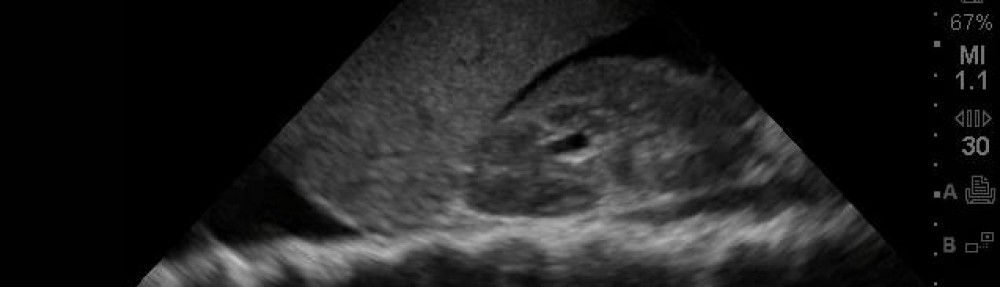
SonoNews: Chest ultrasound for acute dyspnea used by internal medicine…yes!

In a recent publication through Medscape, they site a research article and presentation at the American College of Chest Physicians – in Chest Oct 2012  – stating “With minimal training, internal medicine house staff can successfully use hand-held ultrasound devices in the diagnosis of acute dyspnea.” This is huge! Why? Well, where do I begin? First off, lung ultrasound is advancing like never before – not that it wasn’t already known it was awesome for pneumothorax, pleural effusion, and pulmonary edema, but now the evaluation for pneumonia has gotten a lot of press. Secondly, you have more studies coming out that with minimal training, lung ultrasound can be used by physicians to help diagnose the cause for shortness of breath, which is great and helps get the fear of looking out of the conversation. FInally, and more exciting to me than anything above, is that bedside ultrasound is spreading!!! – to internal medicine (in this posting), but also to involve surgical clinics, sports medicine, pediatrics, and ophthalmologists  – – using bedside ultrasound to aid in their evaluation of their patients.

The article describes: “Ravindra Rajmane, MD, from the New York University Langone Medical Center in New York City, and colleagues reported the study findings in a poster presentation here at CHEST 2012: American College of Chest Physicians Annual Meeting. “The technology of sonography has improved markedly over the past few years,” Dr. Rajmane told Medscape Medical News. “Our study underscores the ease of transporting and effectively applying this technology with minimal training,” she said. “Our residents were able to successfully learn the basics of lung ultrasonography with a 1-hour didactic lecture followed by 1 hour of hands-on training. Unstructured training was also provided during ICU [intensive care unit] rounds.” According to the researchers, acute dyspnea is normally assessed with a combination of history taking, physical examination, electrocardiography, chest x-ray, and lab work. Lung ultrasound is increasingly being used to assess acute respiratory conditions because it is faster, less invasive, and more sensitive.” – Hallelujiah!!!

Keep it spreadin….

Even the OBGYN doctors are learning to use lung ultrasound in evaluating shortness of breath in pregnant patients!

A prior case that evaluated a patient who came in with shock and shortness of breath illustrates a way lung ultrasound can be used to help evaluate, diagnose, and work up your patient and can be find here.
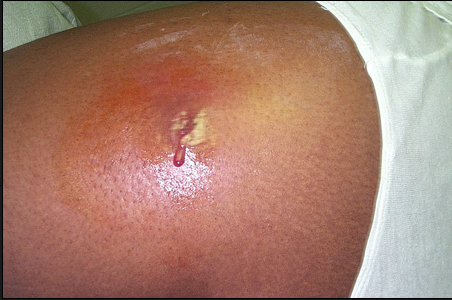
SonoArticle: Ultrasound FIRST for cellulitis/abscess evaluation – by Adhikari & Blaivas, oh yeah!

In a prior post we discussed the concept of what is now one of the post popular phrases that have come to be used as a Sono-term: ‘pus-stalsis’. Yup, that’s right  – the movement of pus seen with compression over the area of hypoechogenicity when using the linear probe to evaluate for fluid filled pocket that’s concerning for abscess. It can fool you! Instead of doing a needle aspiration – take a look! push down on it and see if there is pus-stalsis! It’s easy. Continue reading

SonoParty…&Journal Club… in Northern CA: Stanford, UCSF, UCSF/Fresno, UC Davis, Highland, Kaisers

Prior to leaving for ACEP in Denver, CO there was a gathering (aka “party”) at my home in sunny San Francisco with my friends and colleagues in emergency medicine / emergency ultrasound  – from all of the ultrasound programs in the region – it was amazing… and yes, wine was served! … along with pizza (of course!) We discussed 4 articles as listed below and I took down the US pearls noted from the various physicians who attended: Continue reading

SonoStudy: The “ICU-sound” Protocol – Ultrasound revealed unsuspected clinical anomalies, changed management

You have to love the Italians! They are one of the best users and researchers of bedside ultrasound, particularly in the emergency department and ICUs. This was the newest study in the journal of Anesthesiology. In a prior post, we discussed how bedside ultrasound of the heart and IVC changed medical management of septic patients, and the studies just keep on coming….

Medscape has done a nice interview and assessment of this study as well: “Head-to-toe bedside ultrasound within 12 hours of intensive care unit (ICU) admission modified the admitting diagnosis in more than one quarter of the patients studied and confirmed it in more than half of the patients studied” Continue reading

SonoStudy: Many emergency physicians feel uncomfortable with US-guided central venous access

In the an issue of West JEM, Backlund et al did a survey study of emergency physicians in Colorado with 116 responses asking questions about their use (or lack thereof) bedside ultrasound for central venous access. Quite a few, too many actually, feel uncomfortable using ultrasound for central venous access. 97% of them have ultrasound machines in their department, so it’s not because of a lack of equipment. 77% agree with the statement:”Ultrasound guidance is the preferred method for central venous catheter placement in the emergency department.”  So what was it? Well, it’s always the easiest and most obvious answer: their lack of training and, therefore, a lack of comfort level. “47% cite lack of training in UGCVC as a barrier to performing the technique.”

Continue reading

SonoStudy: False negative FAST scans: association with patient characteristics/injuries/outcomes?

A study recently published in Annals of Emergency Medicine by Laselle et al attempt to estimate associations between false negative FAST results and patient characteristics, specific organ injuries, and patient outcomes by doing a retrospective analysis of consecutive patients who had a blunt abdominal trauma with pathologic free fluid found by CT, DPL (yeah, I know, weird), laparotomy, or autopsy (ouch!). Over 300 enrolled and 162 had a false negative FAST scan. Continue reading

SonoApp & Study: Cellulitis vs Abscess; US more sensitive than CT for soft tissue abscess

A patient comes into your emergency department or outpatient clinic that has a painful red area on their skin:

 -from Medicineo blog

…and you wonder whether its a superficial cellulitis, or if it’s a pus-filled abscess – and if it is an abscess, then how deep is it? how long is it? how loculated is it? Continue reading

SonoStudies: Ultrasound First for Appendicitis, the gift that keeps on giving….

I know I harp on this quite a bit – or at least Ive been found guilty of doing it, but it’s important, relevant, and radiation /cost saving. Ive spoken about US and appendicitis in a prior post when talking about who we should or should not CT. There have been quite a few studies lately about appendicitis and ultrasound’s role in it’s diagnosis. I trained when it was a “clinical” diagnosis – loved those days – ask them where the pain is, they point to the right lower quadrant, it’s tender there with a fever history, I call the surgeon and they come down and decide whether to observe or take to the OR. I do miss those days, but now we live in a more litiginous world, where surgeons records of missed/false diagnoses are public and the prior accepted 20% false rate for appendicitis no longer exists. Continue reading

SonoStudy: >6,500 kids studied – FAST scan in kids with blunt trauma – does it help?

In the July issue of ACEP news: there was an article which highlighted a multi-center study’s results of over 6,000 kids that discusses the FAST scan in the pediatric population.(study has yet to be published, as I cannot find it anywhere)  (FAST = focused assessment with sonography for trauma). It was discussed at SAEM as well. The findings are not surprising: FAST scan is done with low frequency in kids and when it is, it has a low sensitivity and high specificity (if negative, it does not rule out injury). But, one of the exciting parts of it was that low and moderate-risk kids got fewer CT scans when a FAST scan was performed. One of the main authors is Dr. James Holmes, from UC Davis, who has studied ultrasound in trauma extensively, most recently highlighted in JAMA assessing adult patients and the predictors of injury, concluding the FAST scan being the most accurate.

Continue reading

SonoApp/News: “The window to the soul!” Intracranial Pressure by Ocular Ultrasound

One day, years ago, I went to my ophthalmologist who looked in my eye through their ‘whatchamacallit’-scope and then sat back in his chair and asked me (with a straight face): “Are you having any diarrhea?” Of course, this immediately confused me as I wondered whether my years of medical training lacked the concept that my eye could assess diarrhea. I answered with a chuckling, “no” and he concluded with, “ok, then Im sure it’s fine.” I decided to just forget that odd encounter until I started to perform ocular ultrasounds several years ago, excited about how I now dont have to rely on my horrible fundoscopic technique as it gives tons of information not only about the eye, but also the brain! Continue reading