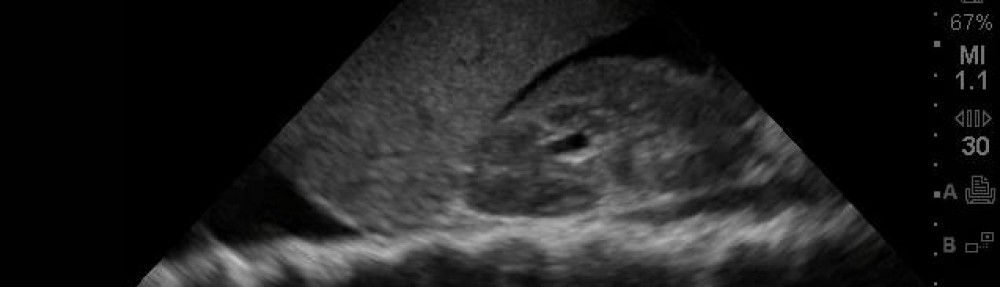
The FAST scan (focused assessment with sonography for trauma) is probably the most frequent application of bedside ultrasound with a moderate sensitivity and very high specificity. It is done as part of our trauma evaluation for blunt or penetrating chest/abdomen/back/pelvic trauma as well as in the evaluation of the unexplained hypotensive patient as part of the RUSH protocol and the patient with a possible ruptured ectopic pregnancy.
Author Archives: SonoSpot
SonoStudy: False negative FAST scans: association with patient characteristics/injuries/outcomes?
A study recently published in Annals of Emergency Medicine by Laselle et al attempt to estimate associations between false negative FAST results and patient characteristics, specific organ injuries, and patient outcomes by doing a retrospective analysis of consecutive patients who had a blunt abdominal trauma with pathologic free fluid found by CT, DPL (yeah, I know, weird), laparotomy, or autopsy (ouch!). Over 300 enrolled and 162 had a false negative FAST scan. Continue reading
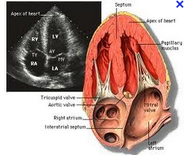
SonoTip&Trick: “I can’t get a good apical 4-chamber view.” Really? well try this…
It can be one of the most difficult views to obtain. Why? Well, you may need to go through some lung tissue, you dont really know where the apex is, and it’s never where it’s supposed to be…. among others. Well I’m hoping to make it a bit easier for you.
SonoCase: 70 yr old fever, hypotensive after root canal, diarrhea & abd pain…”RUSH” +1
This case is one of those cases that make me so proud of the residents I work with…. Drs. Brianne Steele and Cesar Avila identified the need for a RUSH exam, but didn’t stop there – they noticed something during their RUSH and proceeded with another evaluation – obtaining the surprising diagnosis below, saving him time in the emergency department and canceling his CT scan that didn’t need to be done, which I then conclude controls his healthcare charge. period.
70 year old male with a history of (ready for it…) Continue reading
SonoCase: 15 yr old diagnosed with pyelonephritis, persistent fevers…back in the ED
This is a guest post from my good friend and colleague, Dr. Zoe Howard, an ultrasound lover and user, part of ACEP’s medical student initiative, and helping us incorporate bedside ultrasound into the medical school curriculum. She had an amazing case where bedside ultrasound helped make the correct diagnosis for a patient who was getting worse, bounced back to the ED, and stayed in an observation unit to be seen by her (and the ultrasound machine) in the morning:
A sweet 15yo girl presented with a week of suprapubic pain and dysuria… Continue reading
SonoApp & Study: Cellulitis vs Abscess; US more sensitive than CT for soft tissue abscess
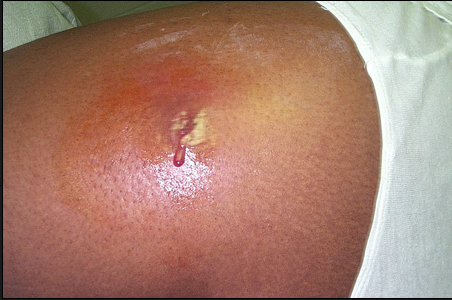
A patient comes into your emergency department or outpatient clinic that has a painful red area on their skin:
-from Medicineo blog
…and you wonder whether its a superficial cellulitis, or if it’s a pus-filled abscess – and if it is an abscess, then how deep is it? how long is it? how loculated is it? Continue reading
SonoCase: 60 yr old male, lethargic, respiratory distress, shock – “RUSH” to bedside
The great thing about bedside ultrasound is that you can get a really REALLY good idea of what is going on with a patient within 5-10 minutes of their arrival, particularly patients who can’t tell you whats going on (whether it’s because they are lethargic and tachypneic – like this case – or altered, unconscious, or speak another language) , but, because you are a great doc, you do know by just walking through the doorway and looking at the patient that he is S.I.C.K. This case discusses exactly that and highlights the RUSH protocol, (see my prior post on the evidence based approach to the RUSH) ,but also how interpreting those applications when correlating to your exam and clinical history is key and adds greatly to your evaluation of the patient.
60 yr old guy (with an amazingly nice wife and family) with a history of cutaneous T-cell lymphoma (chemo/radiation 3 months earlier), Sezary syndrome (with chemo) and Sjogren’s syndrome walks in (yes, thats right, walks in…) to the emergency department waiting room, leaning on his wife after just getting off a plane from Seattle (about a 3 hour flight) after a 1 week cruise. Continue reading
SonoStudies: Ultrasound First for Appendicitis, the gift that keeps on giving….
I know I harp on this quite a bit – or at least Ive been found guilty of doing it, but it’s important, relevant, and radiation /cost saving. Ive spoken about US and appendicitis in a prior post when talking about who we should or should not CT. There have been quite a few studies lately about appendicitis and ultrasound’s role in it’s diagnosis. I trained when it was a “clinical” diagnosis – loved those days – ask them where the pain is, they point to the right lower quadrant, it’s tender there with a fever history, I call the surgeon and they come down and decide whether to observe or take to the OR. I do miss those days, but now we live in a more litiginous world, where surgeons records of missed/false diagnoses are public and the prior accepted 20% false rate for appendicitis no longer exists. Continue reading
SonoResource: The Utility of Ultrasound in Global Health – from my trips and others’ experiences
World Humanitarian Day is August 19th. Travelling to a third world country is what all healthcare providers should experience, as it will make a difference (to either your perspective on life and happiness or to the people who you treat). I have met some amazing people along the way, none who affect me more than those who live there (and the great way they define happiness) and those who go around the world to try to make it a better place. I have travelled to the Middle East, India, Guatemala, Honduras, Mexico, and Nepal with groups of people who have done far more than I could ever do, and the inspiration I get from them is amazing (Stanford International EM facebook page and the Rwanda PURE initiative). The stories I’ve heard, the experiences I went through, and the humbling that comes from it all are what keep me going. But, Ive realized something: there are two ways of thinking about global health and our aid efforts: Continue reading
SonoStudy: >6,500 kids studied – FAST scan in kids with blunt trauma – does it help?
In the July issue of ACEP news: there was an article which highlighted a multi-center study’s results of over 6,000 kids that discusses the FAST scan in the pediatric population.(study has yet to be published, as I cannot find it anywhere) (FAST = focused assessment with sonography for trauma). It was discussed at SAEM as well. The findings are not surprising: FAST scan is done with low frequency in kids and when it is, it has a low sensitivity and high specificity (if negative, it does not rule out injury). But, one of the exciting parts of it was that low and moderate-risk kids got fewer CT scans when a FAST scan was performed. One of the main authors is Dr. James Holmes, from UC Davis, who has studied ultrasound in trauma extensively, most recently highlighted in JAMA assessing adult patients and the predictors of injury, concluding the FAST scan being the most accurate.