SonoApp & Study: Cellulitis vs Abscess; US more sensitive than CT for soft tissue abscess

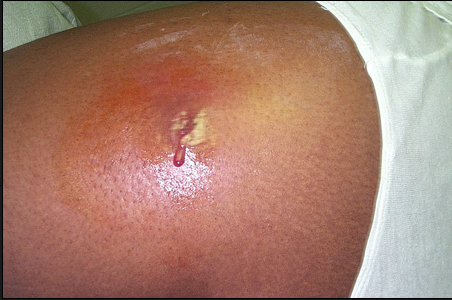
A patient comes into your emergency department or outpatient clinic that has a painful red area on their skin:

 -from Medicineo blog

…and you wonder whether its a superficial cellulitis, or if it’s a pus-filled abscess – and if it is an abscess, then how deep is it? how long is it? how loculated is it? Continue reading

SonoStudies: Ultrasound First for Appendicitis, the gift that keeps on giving….

I know I harp on this quite a bit – or at least Ive been found guilty of doing it, but it’s important, relevant, and radiation /cost saving. Ive spoken about US and appendicitis in a prior post when talking about who we should or should not CT. There have been quite a few studies lately about appendicitis and ultrasound’s role in it’s diagnosis. I trained when it was a “clinical” diagnosis – loved those days – ask them where the pain is, they point to the right lower quadrant, it’s tender there with a fever history, I call the surgeon and they come down and decide whether to observe or take to the OR. I do miss those days, but now we live in a more litiginous world, where surgeons records of missed/false diagnoses are public and the prior accepted 20% false rate for appendicitis no longer exists. Continue reading

SonoResource: The Utility of Ultrasound in Global Health – from my trips and others’ experiences

World Humanitarian Day is August 19th. Travelling to a third world country is what all healthcare providers should experience, as it will make a difference (to either your perspective on life and happiness or to the people who you treat). I have met some amazing people along the way, none who affect me more than those who live there (and the great way they define happiness) and those who go around the world to try to make it a better place. I have travelled to the Middle East, India, Guatemala, Honduras, Mexico, and Nepal with groups of people who have done far more than I could ever do, and the inspiration I get from them is amazing (Stanford International EM facebook page and the Rwanda PURE initiative). The stories I’ve heard, the experiences I went through, and the humbling that comes from it all are what keep me going. But, Ive realized something: there are two ways of thinking about global health and our aid efforts: Continue reading

SonoStudy: >6,500 kids studied – FAST scan in kids with blunt trauma – does it help?

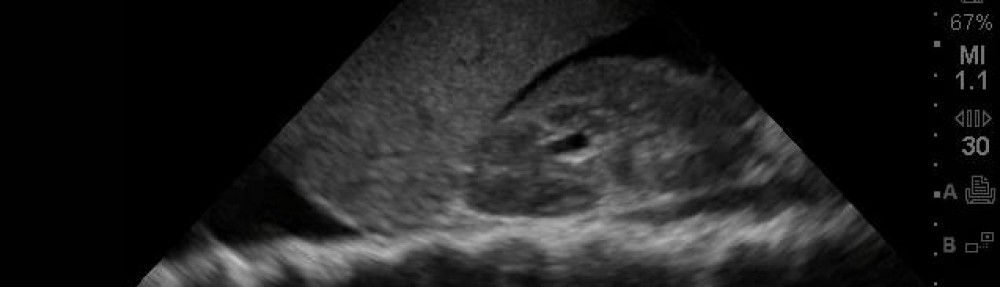
In the July issue of ACEP news: there was an article which highlighted a multi-center study’s results of over 6,000 kids that discusses the FAST scan in the pediatric population.(study has yet to be published, as I cannot find it anywhere)  (FAST = focused assessment with sonography for trauma). It was discussed at SAEM as well. The findings are not surprising: FAST scan is done with low frequency in kids and when it is, it has a low sensitivity and high specificity (if negative, it does not rule out injury). But, one of the exciting parts of it was that low and moderate-risk kids got fewer CT scans when a FAST scan was performed. One of the main authors is Dr. James Holmes, from UC Davis, who has studied ultrasound in trauma extensively, most recently highlighted in JAMA assessing adult patients and the predictors of injury, concluding the FAST scan being the most accurate.

Continue reading

SonoTip&Trick: “I can’t get a good parasternal long view.” Really? well, try this…

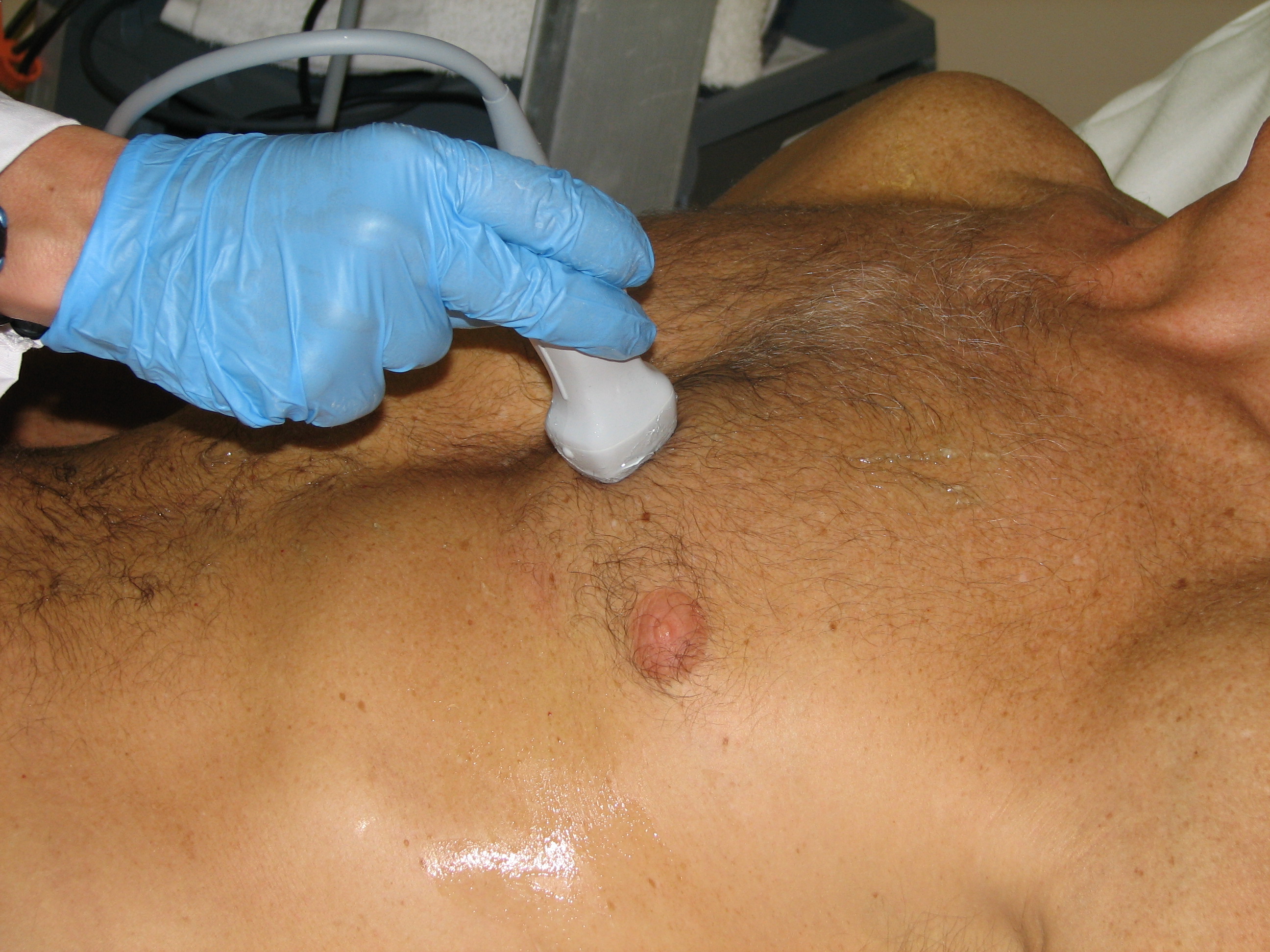
When you have that bad trauma case or that sick patient and you’re trying to assess their cardiac contractility or for pericardial effusion/tamponade, you try the subxiphoid (SX) view first, but despite the tricks outlined in a prior post, you still can’t get it. So, you move to the parasternal long (PSL) view on the left anterior chest, at the 3rd-4th intercostal space:

… and still can’t get a good view, and you think: “What am I doing wrong?!!!” – and then you think of just giving up…. well, let me give you a few tricks that may help. If the patient is able to turn on their left side, then great, if not, it’s ok. Continue reading

SonoApp/News: “The window to the soul!” Intracranial Pressure by Ocular Ultrasound

One day, years ago, I went to my ophthalmologist who looked in my eye through their ‘whatchamacallit’-scope and then sat back in his chair and asked me (with a straight face): “Are you having any diarrhea?” Of course, this immediately confused me as I wondered whether my years of medical training lacked the concept that my eye could assess diarrhea. I answered with a chuckling, “no” and he concluded with, “ok, then Im sure it’s fine.” I decided to just forget that odd encounter until I started to perform ocular ultrasounds several years ago, excited about how I now dont have to rely on my horrible fundoscopic technique as it gives tons of information not only about the eye, but also the brain! Continue reading

SonoNews: American Institute of Ultrasound in Medicine (AIUM) Practice Guidelines released

AIUM  – an organization that truly is an “institute” that is all about ultrasound – it used to be a community of only radiologists, but over the last few years, as bedside ultrasound has become part of many other specialties, there are now more sections for those specialties to become their own ‘community within a community’ – so to speak. Emergency physicians who are ultrasound enthusiasts, of course, are a growing section within AIUM – and if you ever want to meet every single leader in bedside ultrasound, this is the conference to go to! They also have AIUM and ACEP joint workshops in bedside US and promote research among all specialties. AIUM has been releasing their Practice Guidelines of each application and has recently completed quite a few. Each specialty define their own use of bedside ultrasound, and there are “complete” and “limited” (or “focused”, which may not include every detail listed under the AIUM guideline) scans, but its always nice to see what AIUM considers as their guideline to others. Continue reading

SonoCase: 57 yr old with acute chest pain, light-headed….

This case is one of the most interesting cases I have heard about. A true testament to the concept that with bedside US, know what normal looks like well – because if you see something that doesn’t look normal, you may not know what it is sometimes, but it’s not normal and it’s time to explore further. One of our stellar EM residents, Dr. Natatcha Chough, went to the bedside of this patient who was brought by ambulance with appreciable diaphoresis. He was 57 yrs old, c/o gradual onset of chest pressure radiating to his back for 40 minutes (which had resolved after paramedics gave nitroglycerin), feeling light head, with associated shortness of breath, wheezing. He had a history of hypertension and aortic coarctation repaired as a child and at age 20, no history of asthma/COPD, and takes Metoprolol daily.

His vitals: T 36.3  RR 24   HR 83   BP  87/55   O2 sat 93% RA Continue reading

SonoTexts: JAMA review on ultrasound texts – and a list of some of the best

I was flipping through the most recent issue of JAMA and noticed 2 book reviews in the end, both of which had to do with point-of-care ultrasound – yes! Its probably the only thing that would stop me in mid-bite of my midnight snack. One of the books highlighted is by Hadzic, a regional anesthesia book which recently added a section on US-guided nerve blocks – hot topic these days as has been well studied and taught by Mike Stone, Arun Nagdev, and others. Of course, the review done by Chris Moore about Chris Fox’s book, Atlas of Emergency Ultrasound was what got my attention: quite matter of fact about point-of-care ultrasound, which I appreciate. I loved that Chris Fox’s book is highlighted in JAMA. Period. Disclaimer: I am biased as he is the one who made me into an US believer during my residency at UC Irvine, and was the first SonoFiler I wrote about – great guy and good friend.

My favorite part of the review:

Continue reading

SonoCase: 62 year old male c/o general weakness… you “RUSH” to his bedside…

This case was diagnosed in 10 minutes of patient evaluation according to the resident on our ultrasound elective who performed the scan and the team caring for him in the emergency department. The team knew the diagnosis and, therefore, knew what to order quickly. The patient came with his wife by private vehicle into the triage area of the waiting room where he complained of feeling very weak, more and more over the last 2 days, gradual onset, and said he couldn’t catch his breath with just a few steps. His appetite was poor and wasn’t eating or drinking much, denies chest pain/fever/vomiting/diarrhea or bloody/dark stools. He has a history of metastatic lung cancer (on chemo), diabetes (on insulin), hypertension (on beta blocker), CHF (on lasix), and DVT (on Coumadin) – yeah, I know, survival of the fittest! From what I heard, he did have a smile on his face, so at least he had that going for him, which is so amazing to me – if only we could all be like that!

His vitals: T 36.7   RR  18   HR 90   BP 88/60   O2 sat 93% RA; code status: Continue reading